Blogging looks simple from the outside. You write an article, publish it, and wait for people to read it. But after spending time in blogging, I have realized that writing is only one part of the job. A blogger also has to research topics, find keywords, create images, manage social media, check website performance, communicate with readers, and keep content organized.
This is where SaaS tools can make a big difference.
SaaS stands for Software as a Service. In simple words, these are online tools that I can use through a browser without installing complicated software on my computer. Many of these tools work on a monthly or yearly subscription, while some also provide free plans.
From my point of view, the biggest benefit of SaaS tools is convenience. Instead of doing everything manually, I can use different online tools to save time and focus more on creating useful content.
What Are SaaS Tools for Bloggers?
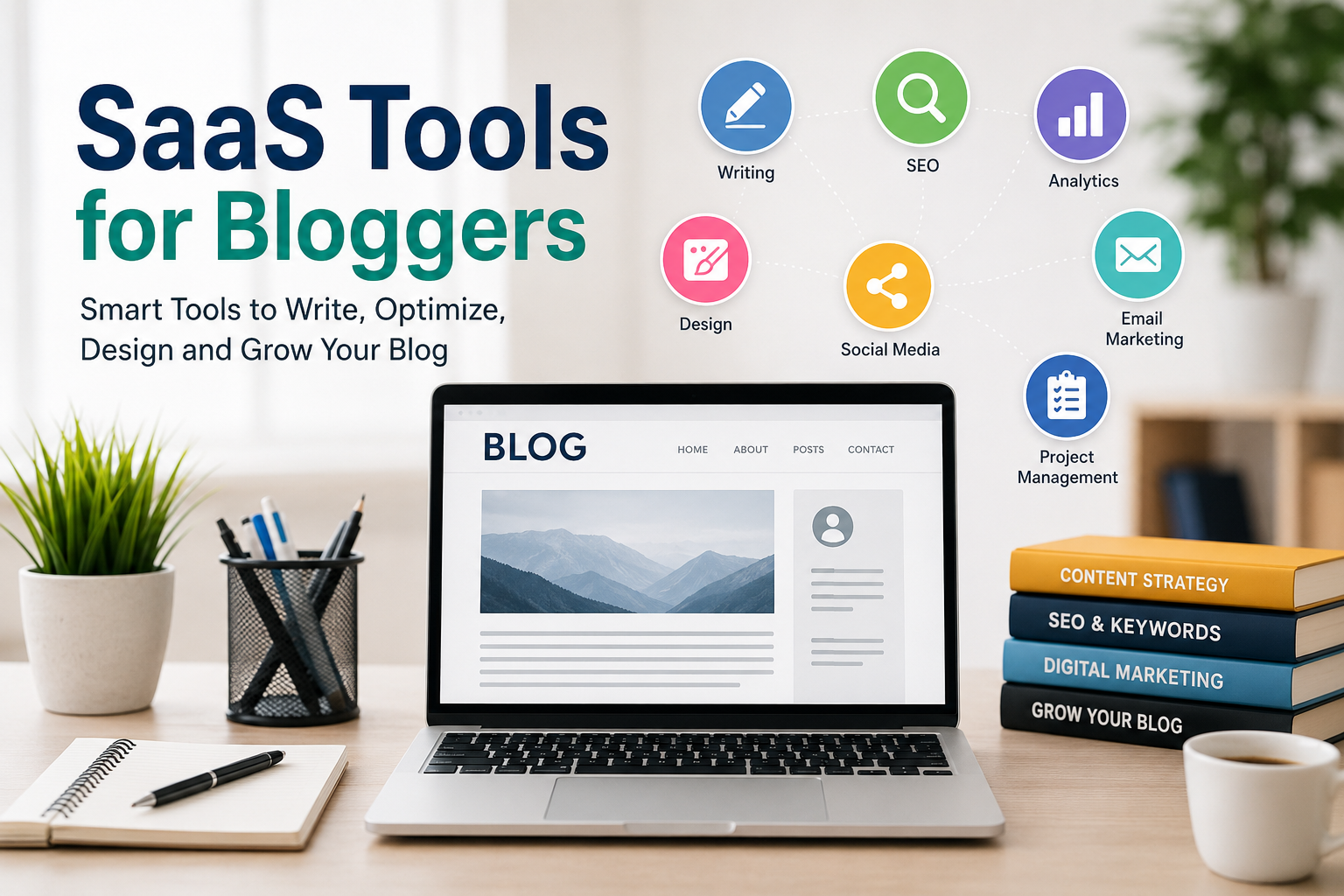
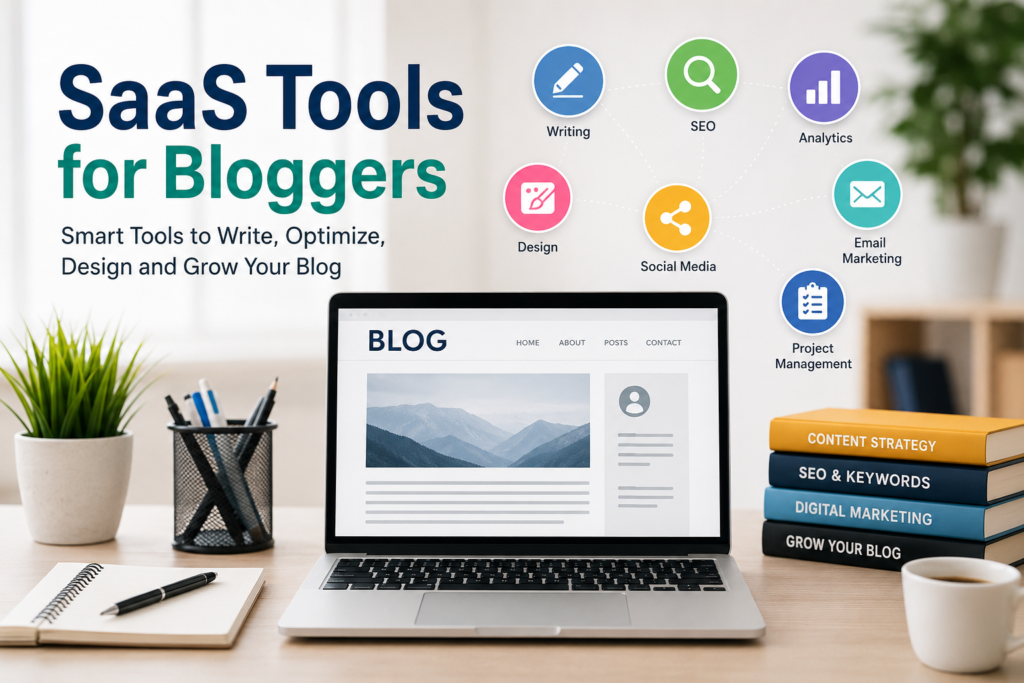
SaaS tools for bloggers are online software platforms designed to help with different parts of blogging. Some tools are made for writing, while others help with search engine optimization, keyword research, graphics, email marketing, analytics, productivity, and content planning.
I personally think a blogger does not need dozens of tools. Having too many tools can actually make blogging more complicated. The better approach is to choose a few tools that solve real problems.
For example, I might use one tool for keyword research, another for designing images, and another for checking website traffic. The goal is not to collect software. The goal is to make blogging easier and more efficient.
Writing and Editing Tools
Writing is the heart of blogging, so I believe every blogger should have a comfortable writing and editing tool.
Online writing platforms can help me organize articles, edit drafts, correct grammar, and keep my ideas in one place. They are especially useful when I work on multiple articles at the same time.
Grammar checking tools are also helpful. Even when I know what I want to say, I can sometimes make small grammar mistakes or write sentences that sound unnatural. An online editor can point out these problems before I publish an article.
However, I do not believe bloggers should depend completely on writing software. I still want my content to sound like me. Tools should help improve my writing, not remove my personal voice.
Keyword Research Tools
If I want people to find my blog through search engines, keyword research becomes important.
Keyword research SaaS tools help bloggers discover what people are searching for online. They can provide information about search volume, keyword difficulty, related topics, and competing pages.
I find these tools useful when I am planning new content. Instead of randomly choosing a topic, I can get an idea of what people are actually interested in.
For example, if I have a technology blog, I can search for topics related to blogging tools, website security, artificial intelligence, or online business. The tool can then show related keywords that may give me more article ideas.
In my opinion, keyword research should be used as a guide rather than a strict rule. A keyword may have a high search volume, but if I cannot write something useful about it, there is little reason to target it.
SEO Tools for Bloggers
Search engine optimization can sometimes feel confusing, especially for beginners. SEO SaaS tools can make the process easier by helping me understand how my content is performing.
These tools can help with keyword research, backlinks, competitor analysis, content optimization, and website audits.
I like using SEO tools because they can show me problems that I might not notice myself. For example, a tool may identify pages with missing titles, weak internal linking, or technical problems.
At the same time, I think bloggers should avoid writing only for search engines. A well optimized article is useful, but it still needs to satisfy the reader. If an article is filled with keywords but provides no real value, readers will probably leave quickly.
Graphic Design Tools
Blogging is not only about text anymore. Images can make an article more attractive and easier to understand.
Online graphic design tools allow bloggers to create featured images, social media graphics, infographics, thumbnails, and simple illustrations without needing professional design skills.
This is one area where SaaS tools have helped me a lot. I do not need expensive design software to create a clean featured image. I can choose a template, change the text, add suitable elements, and create something that fits my article.
For bloggers, consistent design can also help create a recognizable identity. Using similar fonts, layouts, and visual elements across blog posts can make a website look more professional.
Analytics Tools
One of the biggest mistakes a blogger can make is publishing content without checking what happens afterward.
Analytics tools help me understand how visitors interact with my website. I can see which pages receive traffic, where visitors come from, how long they stay, and which content performs better.
This information is extremely valuable because it helps me make better decisions.
For example, if one article receives much more traffic than another, I can study why it is performing well. Maybe the topic is more useful, the headline is stronger, or the article is ranking better in search results.
I believe analytics should not be used only to look at numbers. The real purpose is to learn from those numbers and improve future content.
Email Marketing Tools
Building an email list can be a smart long term strategy for bloggers.
Social media platforms and search engines can change their algorithms, but an email list gives me a direct way to communicate with readers. Email marketing SaaS platforms allow bloggers to collect subscribers, create newsletters, send automated emails, and organize their audience.
I think email marketing works especially well when a blogger consistently provides useful information. People are unlikely to stay subscribed if every email feels like an advertisement.
A simple newsletter containing new articles, helpful tips, personal experiences, or useful resources can be enough to keep readers interested.
Social Media Management Tools
Promoting blog posts on social media can take a lot of time. If I have several social accounts, manually creating and publishing every post can become frustrating.
Social media management tools allow me to prepare content in advance and schedule posts. This means I can spend one session preparing several social media updates instead of logging into different platforms every day.
For me, the biggest advantage is consistency. When content is planned in advance, it becomes easier to maintain a regular posting schedule.
Still, I believe bloggers should not completely automate their social media presence. Real conversations and genuine interaction are important if I want to build a community around my blog.
Project Management and Organization Tools
Blogging involves many small tasks. I may have article ideas, drafts, images, keywords, editing tasks, publishing dates, and promotional plans.
Without organization, it is easy to forget something.
Project management SaaS tools can help me create content calendars and organize tasks. I can create a list of articles I want to write and track each article from idea to publication.
Personally, I think even a simple system can make a huge difference. I do not need an advanced project management setup. A basic content calendar with clear deadlines can already help me stay focused.
Cloud Storage Tools
Cloud storage is another useful category for bloggers.
I often need to store images, documents, article drafts, research notes, and other files. Keeping everything only on my computer can be risky because hardware can fail or files can accidentally be deleted.
Cloud storage gives me access to my files from different devices and provides another layer of protection.
I also find cloud storage useful when working with other people. If I need someone to review an article or image, I can share the necessary file without sending large attachments repeatedly.
AI SaaS Tools
Artificial intelligence has become another important part of the blogging world. AI powered SaaS tools can help with brainstorming, research organization, editing, content planning, and many other tasks.
I see AI as an assistant rather than a replacement for a blogger.
For example, if I am stuck on a topic, I can use an AI tool to generate ideas. I can then choose the ideas that actually make sense for my audience and develop them using my own experience.
I believe this approach creates better content than simply generating an article and publishing it without checking anything. Readers want useful information and authentic opinions, not content that feels completely automated.
How to Choose the Right SaaS Tools
With so many SaaS tools available, beginners can easily become confused. My advice is to start with the problem instead of the tool.
First, ask what is slowing you down.
If writing is taking too long, look for a writing and editing tool. If you are struggling with search traffic, consider an SEO or keyword research platform. If your images look basic, try a design tool.
I also recommend starting with free plans whenever possible. This gives me an opportunity to understand whether a tool actually fits my workflow before paying for it.
Another important thing is to avoid paying for tools that I rarely use. Monthly subscriptions can quietly become expensive when several services are active at the same time.
My Final Thoughts
SaaS tools can make blogging much easier, but I do not think they are the secret to becoming a successful blogger.
The most important things are still useful content, consistency, originality, and understanding the audience.
Tools can save time and help me work smarter, but they cannot replace my experience or personal point of view. I see SaaS tools as support systems that help me handle the technical and repetitive parts of blogging.
If I were starting a blog today, I would not subscribe to ten different platforms immediately. I would start with a writing tool, a keyword research solution, an image design platform, an analytics tool, and a simple organization system. As the blog grows, I would add more tools only when I actually need them.
In my opinion, the best SaaS setup is not the one with the most software. It is the one that makes my blogging process simpler, faster, and more organized while still allowing my own voice to remain at the center of every article.