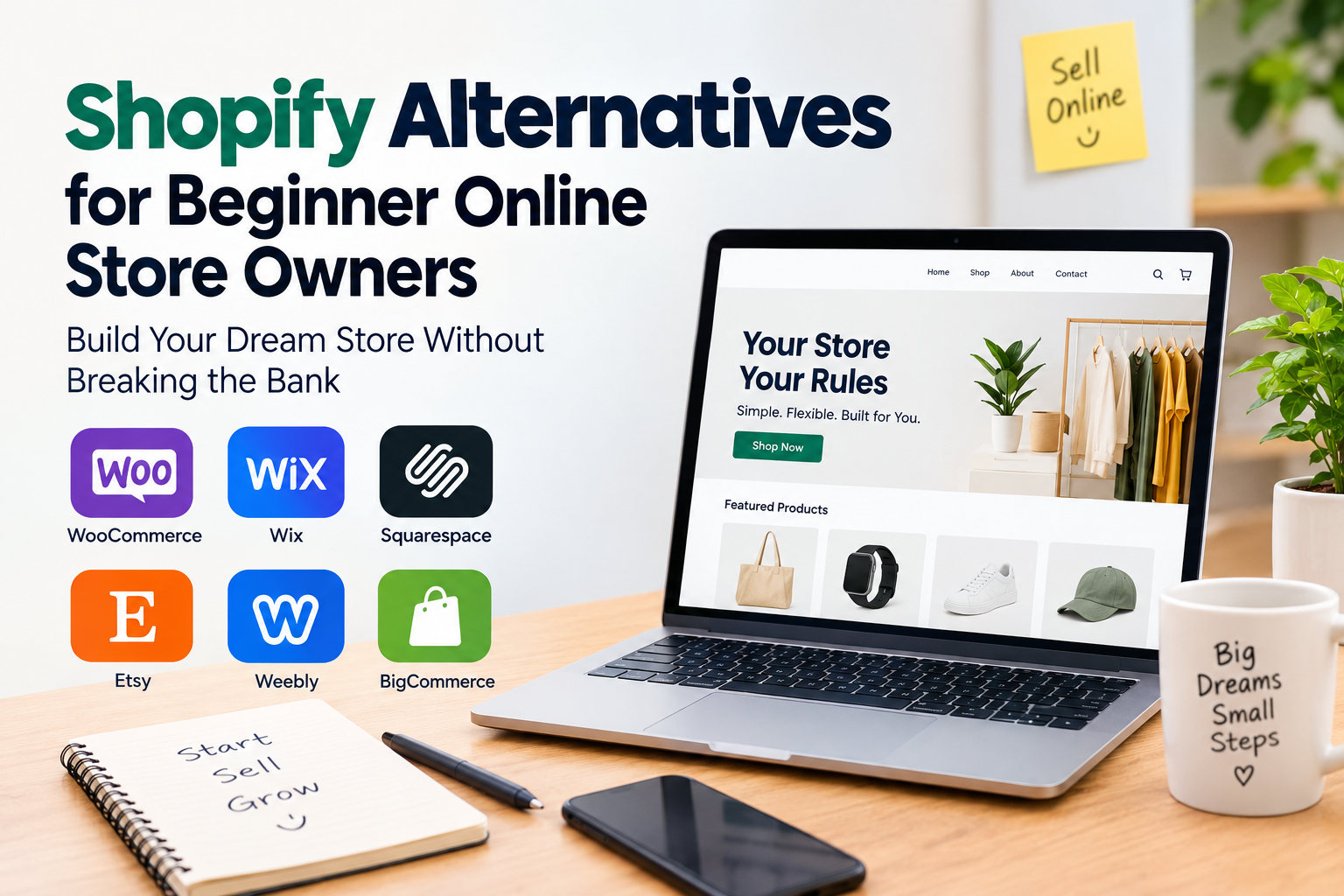
Starting an online store is an exciting step for anyone who wants to turn an idea into a business. Whether you want to sell clothing, handmade products, digital downloads, beauty items, or home accessories, choosing the right ecommerce platform is one of the first decisions you need to make.
Many beginners start their research with Shopify because it is a popular ecommerce platform with tools for managing products, payments, orders, and online stores. However, Shopify is not the only option available. There are several Shopify alternatives for beginner online store owners that offer different pricing structures, customization options, and selling features.
In my opinion, beginners should not choose an ecommerce platform simply because everyone else is using it. The right platform should match your budget, technical knowledge, business goals, and the type of products you plan to sell.
In this guide, I will explain some of the most useful Shopify alternatives, their features, advantages, and limitations. My goal is to help new entrepreneurs understand their options before investing time and money into an online store.
Why Look for Shopify Alternatives?
Shopify provides a convenient way to build an ecommerce website, but some beginners may prefer a different solution.
For example, a new business owner may want to reduce monthly expenses, use an existing WordPress website, or have more control over website design. Others may want a simple platform that does not require managing hosting or technical settings.
Here are some common reasons to explore Shopify alternatives:
- Lower starting costs
- Flexible website customization
- Beginner friendly store building tools
- Integration with existing websites
- Different payment options
- Support for digital and physical products
- More control over website management
It is important to remember that a platform with a low starting price is not always the cheapest overall. Hosting, payment processing, premium themes, extensions, and other services can increase the total cost.
1. WooCommerce

WooCommerce
WooCommerce is one of the most recognized Shopify alternatives for beginners who want to build an online store using WordPress. It is an ecommerce plugin that adds shopping functionality to a WordPress website.
What I personally find interesting about WooCommerce is the flexibility it offers. Instead of working within a completely hosted ecommerce system, store owners can customize many parts of their website using themes, plugins, and hosting services.
WooCommerce supports physical products, digital downloads, inventory management, coupons, and various payment integrations.
Key Features
- WordPress integration
- Product and inventory management
- Customizable store designs
- Digital and physical product support
- Large extension ecosystem
- Flexible checkout options
Pros and Cons
The main advantage of WooCommerce is its flexibility. Beginners can start with basic features and add functionality as their business grows.
However, users are responsible for arranging hosting, security, backups, and software updates. This can feel challenging for someone who has never managed a website.
Best for: Beginners who want greater website control and are comfortable learning WordPress.
2. Wix Ecommerce

Wix
Wix is another popular Shopify alternative for beginner online store owners. It combines website design tools with ecommerce functionality, allowing users to create an online store without advanced coding knowledge.
From my perspective, Wix is worth considering if website appearance is a major priority. Its visual editor makes it possible to arrange website sections, images, text, and product displays through a drag and drop interface.
Wix also offers product management, payment integrations, order tracking, and marketing features, depending on the selected plan and region.
Key Features
- Drag and drop website editor
- Ecommerce templates
- Product galleries
- Order management
- Marketing integrations
- Mobile friendly designs
Pros and Cons
Wix is relatively approachable for beginners because many website building tasks can be completed visually.
The limitation is that advanced customization and ecommerce features may depend on your subscription plan. Moving a complex website to another platform can also require additional work.
Best for: Beginners who want an attractive online store with minimal technical setup.
3. Squarespace Commerce

Squarespace
Squarespace Commerce is a suitable Shopify alternative for entrepreneurs who care about visual presentation and brand identity.
When I look at an online store, I believe design plays an important role in how customers experience a business. Squarespace provides professionally designed templates that help beginners create a consistent appearance without designing every element from scratch.
It supports product listings, inventory tools, payment processing, and ecommerce features through eligible plans.
Key Features
- Professionally designed templates
- Product and inventory management
- Mobile responsive layouts
- Website analytics
- Blogging functionality
- Ecommerce integrations
Pros and Cons
The platform offers a polished website building experience and is useful for businesses that want their products and brand story to look consistent.
However, users who need highly specialized ecommerce functionality may find the available customization options more limited than an open platform such as WooCommerce.
Best for: Creative entrepreneurs, boutique owners, and small brands that prioritize design.
4. BigCommerce

BigCommerce
BigCommerce is a hosted ecommerce platform designed to support businesses with different selling requirements.
Although beginners can use it, I think it is particularly worth exploring if you already have plans to expand your product catalog or sell through multiple channels.
The platform includes product management, payment integrations, sales channel connections, and tools for managing ecommerce operations.
Key Features
- Product catalog management
- Multi channel selling capabilities
- Built in ecommerce functionality
- Inventory management
- Reporting tools
- Store customization
Pros and Cons
BigCommerce provides a broad collection of ecommerce features that can reduce the need for certain additional applications.
However, its plans and interface may feel more complex than necessary for someone launching a very small store with only a few products.
Best for: Beginners who expect to develop a larger ecommerce business over time.
5. Square Online

Square Online
Square Online is an ecommerce solution that can be useful for small businesses, especially those that sell both online and in person.
For example, imagine someone operating a small bakery, clothing shop, or local gift store. They may need a website where customers can browse products while the business also manages physical sales.
Square provides tools that connect online selling with its broader commerce ecosystem. Availability and payment features depend on the country and account eligibility.
Key Features
- Online store creation
- Product management
- Order handling
- Payment integrations
- In person and online commerce tools
- Business management features
Pros and Cons
One advantage is the connection between online and physical selling activities.
However, beginners should check payment availability and regional support before choosing the platform. Some features may also require paid plans or additional services.
Best for: Small local businesses that want to manage online and offline sales together.
6. Etsy

Etsy
Etsy is different from traditional ecommerce website builders because it operates primarily as an online marketplace.
Instead of building a completely independent website, sellers create a shop within Etsy and list products for marketplace customers.
I believe this approach can be useful for beginners who want to test product demand before investing in a full ecommerce website.
Etsy is commonly associated with handmade goods, personalized products, vintage items, and craft supplies, subject to its seller policies.
Key Features
- Marketplace shop creation
- Product listing tools
- Customer messaging
- Order management
- Marketplace search visibility
- Seller analytics
Pros and Cons
Etsy allows beginners to start selling without managing an entire website independently.
However, sellers must follow marketplace rules and account for listing, transaction, payment processing, and possible advertising fees. Competition and marketplace dependence are also important considerations.
Best for: Handmade product sellers, artists, craft businesses, and creative entrepreneurs.
7. Weebly

Weebly
Weebly is known for its simple website building approach and ecommerce functionality through its available services.
For beginners who want to create a basic website and showcase a limited selection of products, its straightforward design experience may be worth investigating.
However, users should carefully review current plan availability and ecommerce support before starting a new project, as product features and service offerings can change.
Key Features
- Visual website building
- Basic store creation
- Product presentation
- Website templates
- Business website tools
- Ecommerce functionality through supported plans
Pros and Cons
Its simplicity can be helpful for users who do not want to deal with complicated website settings.
On the other hand, businesses that need extensive customization or advanced ecommerce features may eventually require another platform.
Best for: Beginners who need a simple website with basic selling functionality.
Shopify Alternatives Comparison Table
The following table provides a general comparison of these ecommerce platforms.
| Platform | Ease of Use | Main Advantage | Suitable For |
|---|---|---|---|
| WooCommerce | Moderate | Flexibility | WordPress users |
| Wix | Easy | Visual editing | New entrepreneurs |
| Squarespace | Easy | Professional design | Creative brands |
| BigCommerce | Moderate | Ecommerce features | Growing stores |
| Square Online | Easy | Online and offline sales | Local businesses |
| Etsy | Easy | Marketplace access | Handmade sellers |
| Weebly | Easy | Simple website creation | Small stores |
Pricing, features, and payment availability vary by plan and country, so always check the official platform website before making a purchase.
How to Choose the Right Shopify Alternative
Choosing an ecommerce platform becomes easier when you understand what your business actually needs.
Consider Your Starting Budget
Before signing up, calculate the complete cost of operating your store. This includes subscriptions, hosting, payment processing, themes, applications, and domain registration.
A platform that appears inexpensive at first may become more expensive when you add essential features.
Think About Your Technical Skills
If you have little website experience, a hosted website builder may be easier to manage.
If you are comfortable learning WordPress, WooCommerce can provide more control over the website structure and functionality.
Understand Your Product Type
Different platforms serve different business models.
Physical products require inventory and shipping tools. Digital products may need secure downloads and automated delivery. Handmade products may benefit from marketplace exposure.
Choose a platform that supports your actual products rather than paying for features you will never use.
Check Payment Options
Payment availability is an important consideration for international sellers.
Before choosing a platform, verify whether its supported payment gateways work in your country and whether you can receive payouts through your preferred payment method.
Plan for Future Growth
Your first store may contain only five products, but your business could eventually expand to hundreds of listings.
Consider whether the platform supports additional products, marketing integrations, customer management, and new sales channels as your business develops.
Common Mistakes Beginners Should Avoid
In my experience, new online store owners sometimes spend too much time comparing website designs and not enough time understanding their customers.
Here are a few mistakes worth avoiding:
Choosing a platform only because it is popular: A popular platform may not match your business model or budget.
Ignoring additional costs: Always review transaction fees, paid extensions, hosting, and subscription renewals.
Buying too many applications: Start with essential features and add tools when a real business need appears.
Neglecting mobile design: Many customers browse online stores using smartphones, so your product pages and checkout experience should work properly on smaller screens.
Launching without testing: Place a test order, review product descriptions, check payment settings, and verify shipping information before promoting your store.
Frequently Asked Questions
What is the best Shopify alternative for beginners?
There is no single platform that suits every beginner. WooCommerce offers flexibility, Wix provides visual editing, and Squarespace focuses on design. The right option depends on your budget, technical skills, and business requirements.
Can I start an online store without Shopify?
Yes. You can build an online store using platforms such as WooCommerce, Wix, Squarespace, BigCommerce, or Square Online. You can also sell through marketplaces such as Etsy if your products meet their requirements.
Which Shopify alternative is suitable for a low budget?
WooCommerce can be started with a free core plugin, although hosting, domain registration, and other expenses still apply. Some hosted platforms also offer introductory or lower tier plans, but their features and limitations should be reviewed carefully.
Can beginners sell digital products without Shopify?
Yes. Several ecommerce platforms support digital products, including downloadable files, templates, and other digital resources. Check the available file delivery and payment features before selecting a platform.
Is WooCommerce better than Shopify?
WooCommerce and Shopify use different approaches. WooCommerce offers WordPress based flexibility and more responsibility for website management, while Shopify provides a hosted ecommerce environment. Your technical skills and preferred level of control should guide the decision.
Final Thoughts
Finding the right Shopify alternative for beginner online store owners is about understanding your priorities rather than following trends.
WooCommerce can be useful if you want flexibility and control. Wix and Squarespace provide visual website building experiences. BigCommerce offers ecommerce functionality for businesses with expansion plans, while Square Online can support businesses that sell both online and in person. Etsy provides a marketplace option for eligible creative products.
My advice is to begin with a clear business plan, a realistic budget, and a small collection of products. You do not need an expensive website with dozens of features to start learning about ecommerce.
Choose a platform that you can comfortably manage, focus on providing useful products, and improve your store as you gain experience. A successful online business is built through consistent effort, customer understanding, and smart decisions, not simply through the platform you select.