When I think about starting a new business, one of the biggest challenges is figuring out how to manage everything without spending too much money. A startup usually has a small team, a limited budget, and a lot of work to handle. This is where SaaS tools can make a huge difference.
SaaS stands for Software as a Service. Instead of buying software and installing it permanently on a computer, you can usually access SaaS tools through the internet. Most of them work with a monthly or yearly subscription, and many also offer free plans for beginners.
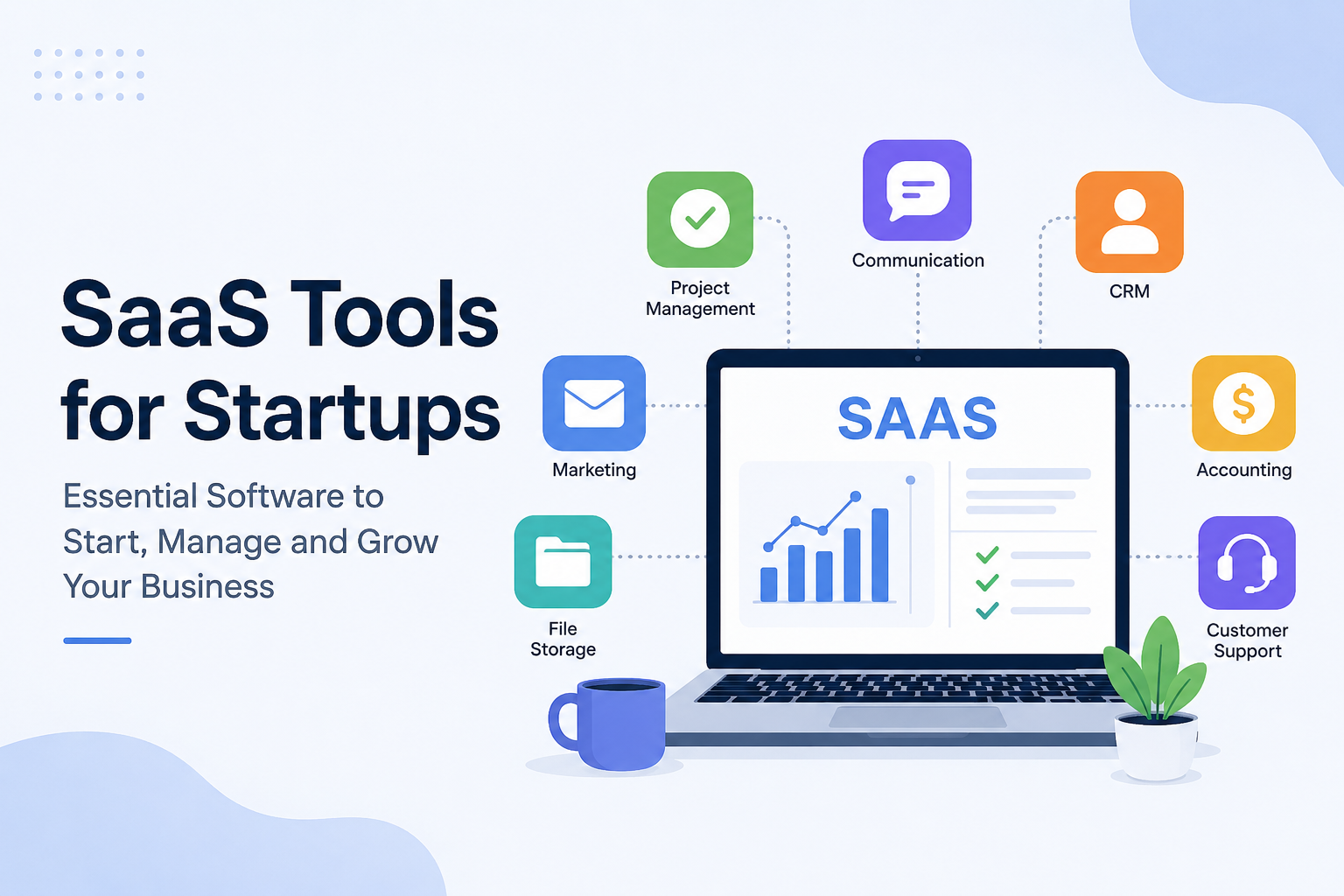
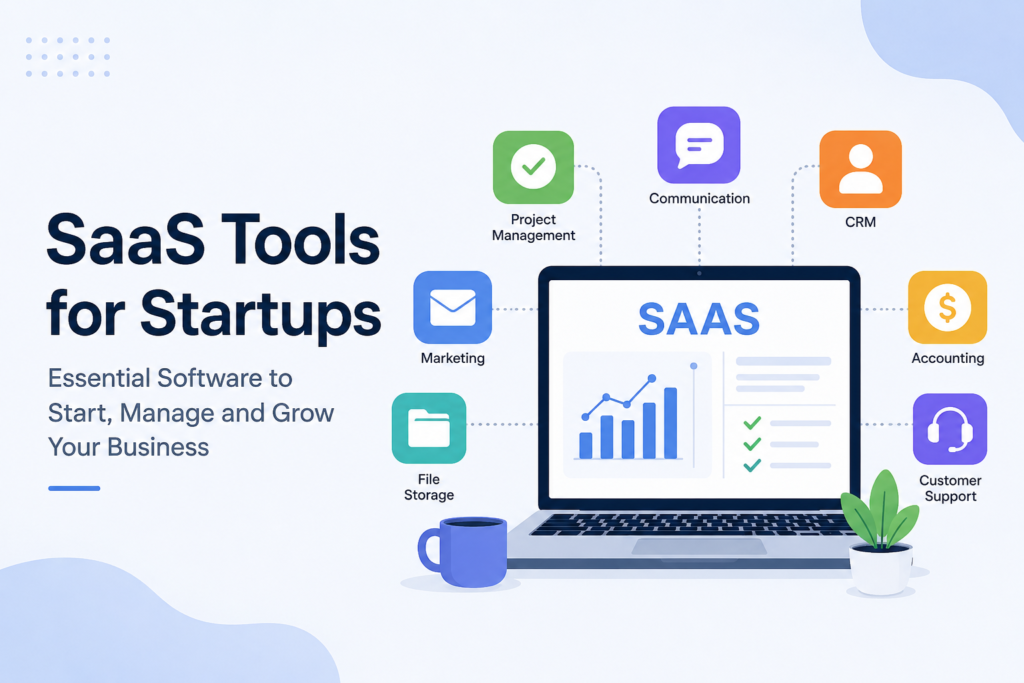
In my opinion, SaaS tools are especially useful for startups because they allow small teams to use professional software without making a large investment. You can find tools for project management, communication, accounting, marketing, customer support, file storage, analytics, and many other business activities.
In this article, I will explain some of the most useful types of SaaS tools for startups and how they can help a new business grow.
Why SaaS Tools Are Important for Startups
When a business is new, every resource matters. You do not want your team spending hours on tasks that could easily be automated or organized with the right software.
One reason I like SaaS tools is their flexibility. A startup can begin with a basic plan and upgrade later when the business grows. This is much easier than purchasing expensive software at the beginning.
Another advantage is accessibility. Since most SaaS applications are cloud based, team members can often access their work from different locations and devices.
SaaS tools can also improve collaboration. A small team may include people working from home, in an office, or from different cities. Having everything available online makes communication and teamwork much easier.
Project Management Tools
Managing tasks can become confusing very quickly when a startup starts growing. At first, you may be able to remember everything yourself, but eventually you will have meetings, deadlines, customer requests, marketing tasks, and product updates happening at the same time.
Project management SaaS tools can help organize all of this information in one place.
These tools usually allow teams to create projects, assign tasks, set deadlines, add notes, and track progress. Some also provide calendars, boards, reports, and automation features.
For me, the biggest benefit of project management software is visibility. Everyone can see what needs to be done and who is responsible for each task.
This can reduce confusion and help a startup stay organized.
Communication Tools
Communication is one of the most important parts of running a startup. If team members cannot communicate properly, even a great business idea can become difficult to manage.
Communication SaaS tools provide online spaces where employees can discuss projects, share files, send updates, and communicate quickly.
Instead of sending hundreds of emails, a team can create separate channels or conversations for different projects.
I believe this is particularly useful for remote startups. When everyone works from different locations, having one central communication platform can make the team feel more connected.
However, startups should avoid using too many communication tools at the same time. If employees have to check several different platforms every few minutes, productivity can actually decrease.
Customer Relationship Management Tools
Customers are the foundation of every business, so managing customer information should be a priority.
Customer relationship management software, commonly called CRM software, helps businesses organize information about customers and potential customers.
A CRM can store contact details, sales information, conversations, follow up dates, and other useful information.
For a startup, this can be extremely valuable. Imagine receiving an inquiry from a potential customer today and forgetting to follow up next week. A CRM can help prevent situations like this.
As a business grows, keeping customer information organized becomes even more important.
Accounting and Finance Tools
Money management is another area where startups need to be careful.
Accounting SaaS tools can help businesses track income, expenses, invoices, payments, and other financial information.
Some platforms also provide reports that help business owners understand where their money is going.
In my opinion, startups should start tracking their finances from the beginning instead of waiting until the business becomes successful.
Even a small business should know how much money it is earning, how much it is spending, and whether it is actually making a profit.
Good financial records can also make tax preparation and financial planning easier.
Marketing Tools
Marketing is essential for attracting new customers. Fortunately, startups do not always need a large marketing team to get started.
There are many SaaS tools that can help with email marketing, social media management, content planning, search engine optimization, and advertising.
Email marketing tools can help businesses create newsletters and communicate with customers. Social media tools can make it easier to schedule and manage posts.
SEO tools can help website owners understand keywords, search rankings, and website performance.
I think marketing SaaS tools are especially useful because they can save a small team a significant amount of time.
Instead of manually performing every marketing task, startups can use software to organize repetitive activities.
Customer Support Tools
Once customers start using a product or service, questions and problems will naturally appear.
Customer support SaaS tools can help startups manage these conversations professionally.
Depending on the platform, businesses may be able to manage email requests, live chat, support tickets, knowledge bases, and automated responses.
For a new business, customer support is more than just solving problems. It is also an opportunity to understand customers.
When I look at customer questions, I often see them as useful feedback. If many customers ask the same question, it may indicate that the product or website needs improvement.
File Storage and Collaboration Tools
Startups create a lot of files. There may be documents, presentations, spreadsheets, images, contracts, marketing materials, and product information.
Cloud storage SaaS tools allow businesses to store files online and share them with team members.
This can be much more convenient than keeping important documents on individual computers.
Another benefit is collaboration. Several people can often work on the same document without constantly sending different versions to each other.
For startups, this can help reduce confusion and prevent important files from getting lost.
Time Tracking Tools
Time is one of the most valuable resources for a startup.
Time tracking software can help teams understand how long different tasks are taking. This can be especially helpful for businesses that work with clients or charge based on hours.
Even when a startup does not bill clients hourly, time tracking can still provide useful information.
For example, you might discover that your team spends too much time on administrative work. That could be a sign that certain tasks should be automated.
Analytics Tools
Making decisions based only on assumptions can be risky.
Analytics SaaS tools provide information about website visitors, customers, sales, marketing campaigns, and other business activities.
For an online startup, website analytics can show which pages people visit, where visitors come from, and what actions they take.
This information can help business owners make better decisions.
In my opinion, analytics become more useful when you focus on meaningful information instead of trying to track everything.
A startup does not need dozens of complicated reports. It needs a clear understanding of the numbers that actually affect the business.
How to Choose the Right SaaS Tools
There are thousands of SaaS products available today, so choosing the right ones can be difficult.
My advice is to start with the actual problem you are trying to solve.
Do not choose a tool simply because it has hundreds of features. A complicated platform can sometimes create more work instead of reducing it.
Price is also important. Startups should look for tools that provide enough value to justify their cost.
I would also recommend checking whether a tool offers a free trial or free plan. This allows you to test the software before committing to a subscription.
Integration is another important factor. If your project management tool, communication platform, CRM, and accounting system can work together, your team may be able to save even more time.
Security should never be ignored. Business and customer information can be sensitive, so startups should choose reputable providers and use strong passwords and appropriate security settings.
Avoiding Too Many SaaS Tools
One mistake I see many startups make is subscribing to too many tools.
It can be tempting to try every new application that promises to increase productivity. But eventually, your team may end up managing the tools instead of managing the business.
I believe it is better to have a small collection of reliable tools that your team actually uses.
For example, a startup might need one project management platform, one communication tool, one CRM, one accounting solution, and a few marketing tools.
The exact combination depends on the business.
Final Thoughts
SaaS tools can make running a startup much easier. They can help teams organize projects, communicate with customers, manage finances, promote products, store files, and understand business performance.
However, software itself does not make a startup successful. The real value comes from how effectively the team uses it.
In my view, the best approach is to start small. Identify the biggest problems in your business and find tools that solve those specific problems. As the company grows, you can add more software when there is a genuine need for it.
A good SaaS setup should save time, reduce unnecessary work, improve communication, and help the team focus on important business goals.
For startups with limited budgets and small teams, this flexibility can be extremely valuable. With the right tools and a practical approach, SaaS software can become an important part of building a more organized and efficient business.