In my opinion, managing employees has become much easier because of HR SaaS software. A few years ago, many businesses depended on spreadsheets, paper files, emails, and different disconnected tools to manage their employees. This worked for small teams, but as a company grows, these traditional methods can become difficult to manage.
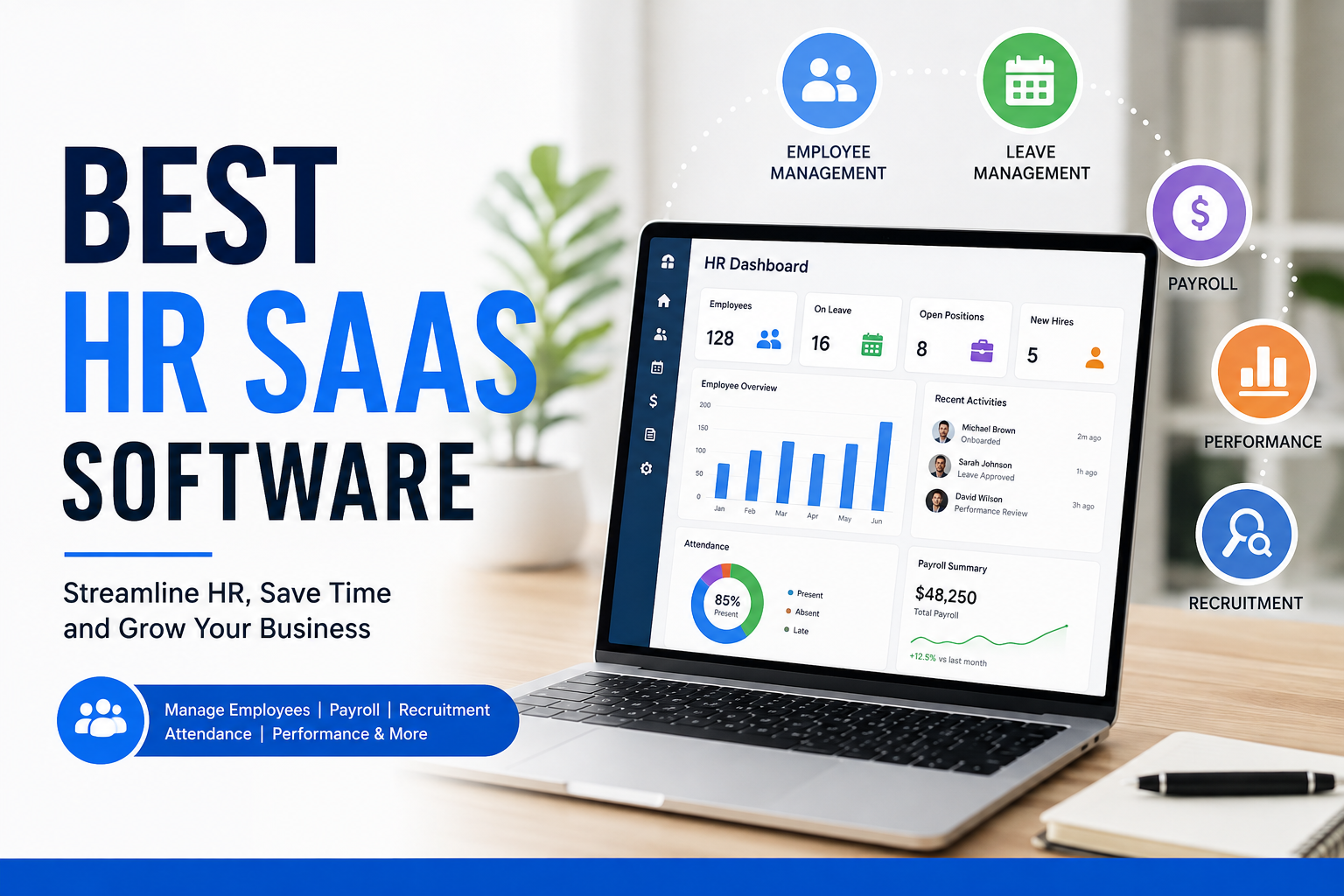
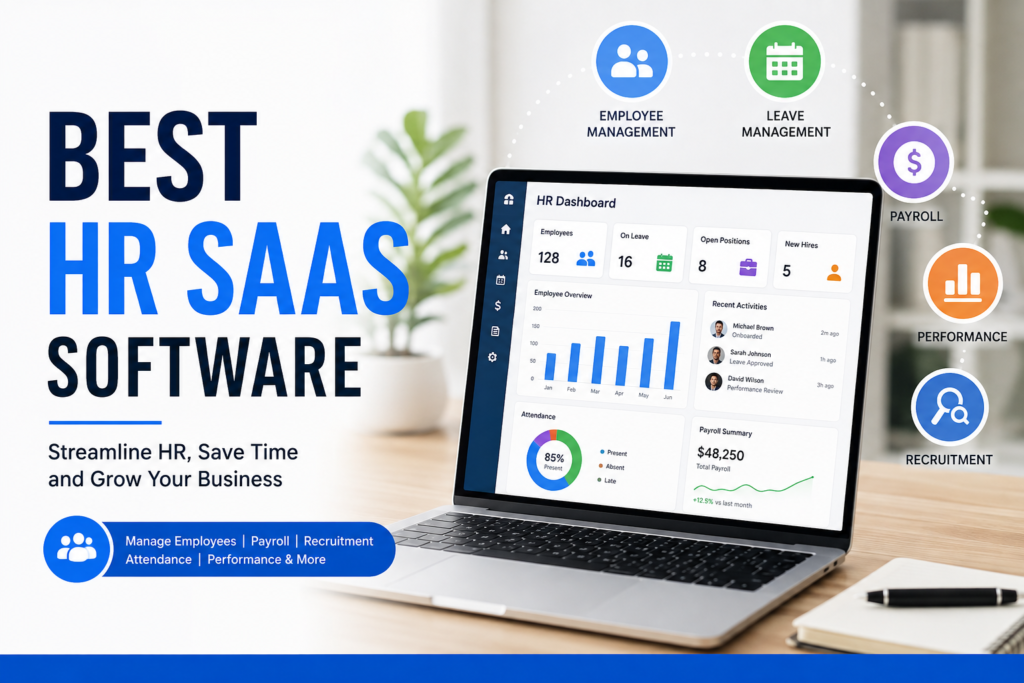
Today, HR SaaS software gives businesses a much better way to handle employee information, attendance, payroll, recruitment, performance, leave management, and many other HR tasks from one place. I personally think that the right HR software can save a lot of time and reduce many small mistakes that usually happen when HR work is handled manually.
There are many HR SaaS platforms available in the market, and each one has its own strengths. Some are better for small businesses, while others are designed for large organizations. In this article, I will share my views about some of the best HR SaaS software and explain what makes each option useful.
What Is HR SaaS Software?
Before talking about the best options, I think it is important to understand what HR SaaS actually means.
HR SaaS stands for Human Resources Software as a Service. It is basically an online HR system that businesses can access through the internet. Instead of installing complicated software on office computers, companies can use the platform through a web browser or mobile application.
The biggest advantage for me is convenience. HR teams can manage employee information from almost anywhere. Employees can also access certain features themselves, such as requesting leave, checking their information, viewing documents, or updating personal details.
Another benefit is that businesses usually pay a subscription fee instead of purchasing expensive software upfront. This makes HR SaaS particularly attractive for startups and growing companies.
1. BambooHR
BambooHR is one of the HR platforms that I would consider when simplicity is a major priority. The platform is well known for providing tools for employee information, onboarding, time tracking, performance management, and reporting.
What I like about BambooHR is that it focuses strongly on making HR management easier. The interface is designed to be relatively simple, which can be helpful for companies that do not have a large HR department.
For small and medium sized businesses, I think BambooHR can be a strong choice because it brings several important HR functions together. Instead of keeping employee records in different spreadsheets, HR teams can organize everything inside one system.
Its employee management and onboarding features can also help businesses create a smoother experience for new employees.
2. Gusto
Gusto is another popular HR SaaS platform, especially among small businesses. From my point of view, one of its biggest strengths is payroll.
Payroll can become complicated when a company starts hiring more people. Salaries, taxes, employee information, benefits, and other details all need to be managed correctly. Gusto attempts to bring many of these tasks together in one platform.
I think Gusto is particularly useful for small businesses that want HR and payroll features without using a complicated enterprise system.
It can also help with employee benefits and onboarding. For a small company owner who does not want to spend hours managing administrative work, having these features in one place can make a big difference.
3. Rippling
Rippling is an HR SaaS platform that I find interesting because it goes beyond traditional HR management. It can combine HR, payroll, benefits, and employee technology management.
For modern businesses, employees often need access to different applications and company systems. Managing those accounts manually can take a lot of time. Rippling focuses on connecting employee information with different business processes.
In my opinion, this makes it a good option for companies that are growing quickly and want to automate more of their administrative work.
The platform can be especially useful for businesses with remote or distributed teams because employees may be working from different locations.
4. Deel
Remote work has changed the way companies hire people, and this is where Deel can become useful. Deel focuses heavily on global hiring, payroll, contractors, and international employment.
I think Deel is a good option for businesses that have employees or contractors in different countries. International hiring can involve complicated processes because every country has different employment rules, taxes, and requirements.
Instead of trying to manage everything separately, businesses can use a platform designed specifically for international workforce management.
For companies that want to build a global team, I believe this type of HR SaaS solution can remove many administrative problems.
5. Workday
When it comes to large organizations, Workday is one of the names that frequently comes up. It is designed for organizations that need advanced human capital management and financial management capabilities.
From my perspective, Workday is more suitable for larger companies because smaller businesses may not need such a broad system.
Large organizations often have thousands of employees, multiple departments, complex reporting structures, and detailed HR requirements. A platform like Workday can help bring many of these processes together.
Its reporting and workforce management capabilities are also useful for companies that want to make HR decisions based on data rather than guesswork.
6. Zoho People
Zoho People is another HR SaaS platform worth considering, especially for businesses that already use other Zoho products.
I like the idea of having HR software connected with other business tools. When different systems can communicate with each other, employees do not have to enter the same information repeatedly.
Zoho People offers features related to employee management, attendance, leave, performance, onboarding, and other HR processes.
In my opinion, it can be a practical choice for small and medium sized businesses that want a relatively affordable HR solution with several useful features.
7. HiBob
HiBob, also known as Bob, is an HR platform that focuses on modern employee management. I think it is particularly interesting for companies that care about employee experience and company culture.
HR is not only about salaries and attendance. In my view, good HR management should also help employees feel connected to the organization.
HiBob provides tools for employee management, onboarding, performance, engagement, and workforce information. These features can help HR teams understand what is happening within the company.
For growing companies with modern workplace cultures, I think HiBob can be an option worth exploring.
What Features Should the Best HR SaaS Have?
When I compare HR SaaS platforms, I do not only look at the number of features. Having hundreds of features does not automatically make software better.
For me, ease of use is one of the most important things. If HR employees cannot understand the platform easily, the software can create more work instead of reducing it.
Employee management is another important feature. The platform should make it easy to store and organize employee information.
Payroll and benefits are also important for many businesses. However, the exact requirements depend on the country and the size of the company.
I also think attendance and leave management are essential. Employees should be able to request time off without sending multiple emails to HR.
Recruitment and onboarding features can also be valuable. A good onboarding process can help new employees understand the company and start their work more confidently.
Reporting is another feature I would not ignore. HR teams need useful information to understand employee turnover, attendance, performance, and other important areas.
Finally, security should always be considered. HR software contains sensitive employee information, so businesses need to choose a provider that takes data protection seriously.
How I Would Choose the Best HR SaaS
If I were choosing HR software for a business, I would first look at the company’s actual needs.
For a small business, I would probably prioritize simplicity, payroll, employee records, attendance, and affordability. There is no reason to pay for dozens of advanced features that the company will never use.
For a growing company, I would look for software that can scale as the workforce increases. Switching HR systems every few years can be frustrating, so choosing a platform that can grow with the company makes sense.
For a global company, I would focus more on international payroll, compliance, contractor management, and support for employees in different countries.
I would also test the software before making a final decision. A free trial or product demonstration can show whether the interface is actually easy to use.
Final Thoughts
In my opinion, the best HR SaaS software is not necessarily the platform with the longest list of features. The best option is the one that solves a company’s HR problems without making everyday work more complicated.
BambooHR can be a strong option for businesses that want simple HR management. Gusto is attractive for small businesses that need payroll and HR features. Rippling stands out for companies that want HR combined with technology management. Deel can be useful for global teams, while Workday is better suited to larger organizations with complex requirements. Zoho People and HiBob are also worth considering depending on the company’s size and priorities.
Personally, I believe businesses should focus on usability, security, scalability, pricing, and the features they actually need. Good HR software should make life easier for HR teams and employees instead of becoming another complicated system to manage.
The HR software market is growing quickly, and there are many choices available today. Taking some time to compare platforms before making a decision can help a company find a solution that fits its workflow and budget.
For me, the biggest value of HR SaaS is simple. It gives businesses a central place to manage people and HR processes while reducing unnecessary manual work. As companies continue to adopt remote work and digital systems, I believe HR SaaS will become an even more important part of modern business management.