Starting a business alone can be exciting, but it also comes with many responsibilities. As a solopreneur, I have to think about managing customers, creating content, handling finances, organizing projects, and promoting my services. Doing everything manually can quickly become exhausting, especially when there is a limited budget.
This is where affordable SaaS tools for solopreneurs become useful. SaaS, or Software as a Service, allows users to access software through the internet without installing complicated programs or purchasing expensive licenses.
In my opinion, choosing the right software is not about buying every popular subscription. It is about finding tools that solve real problems, save time, and support business growth without putting unnecessary pressure on monthly expenses.
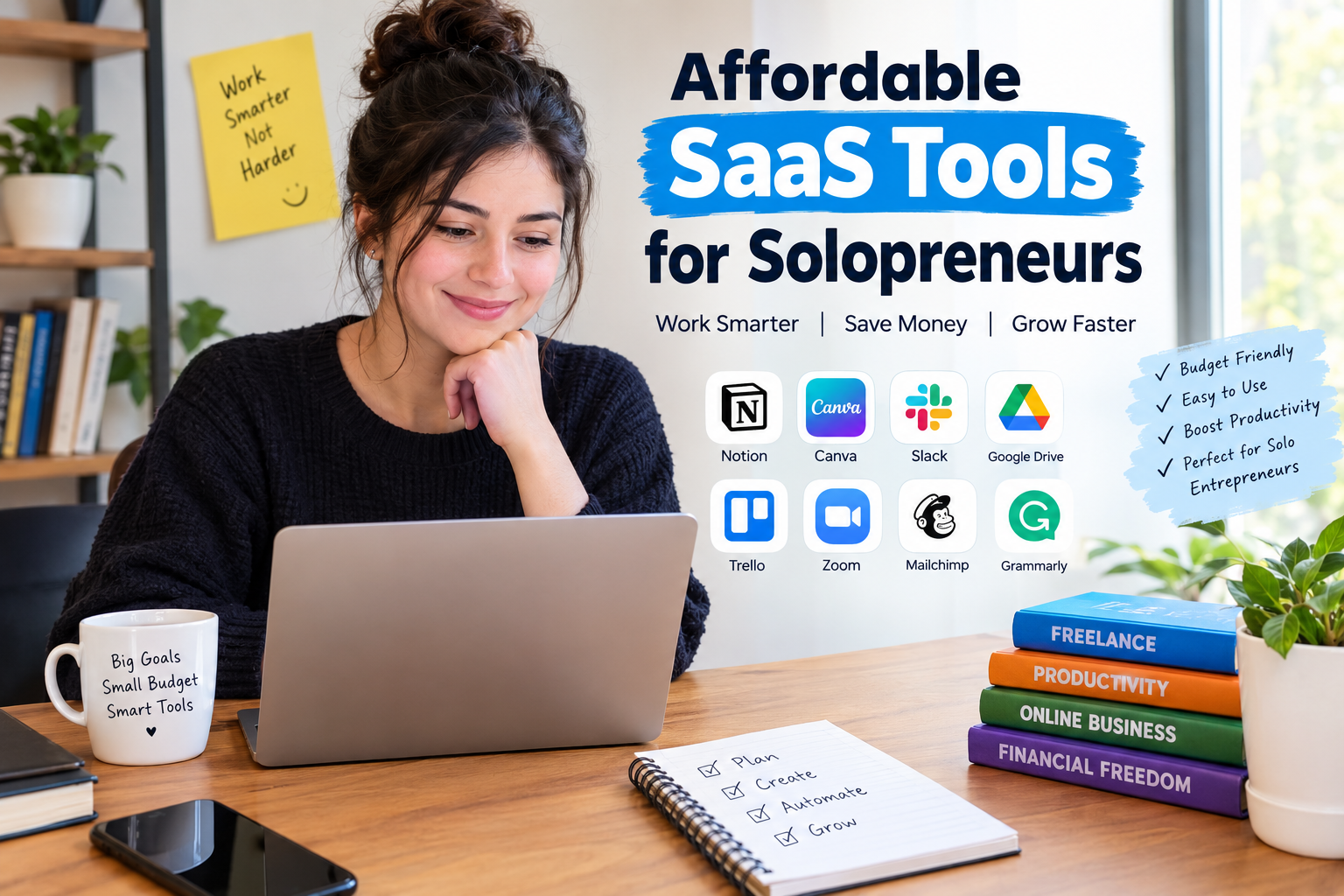
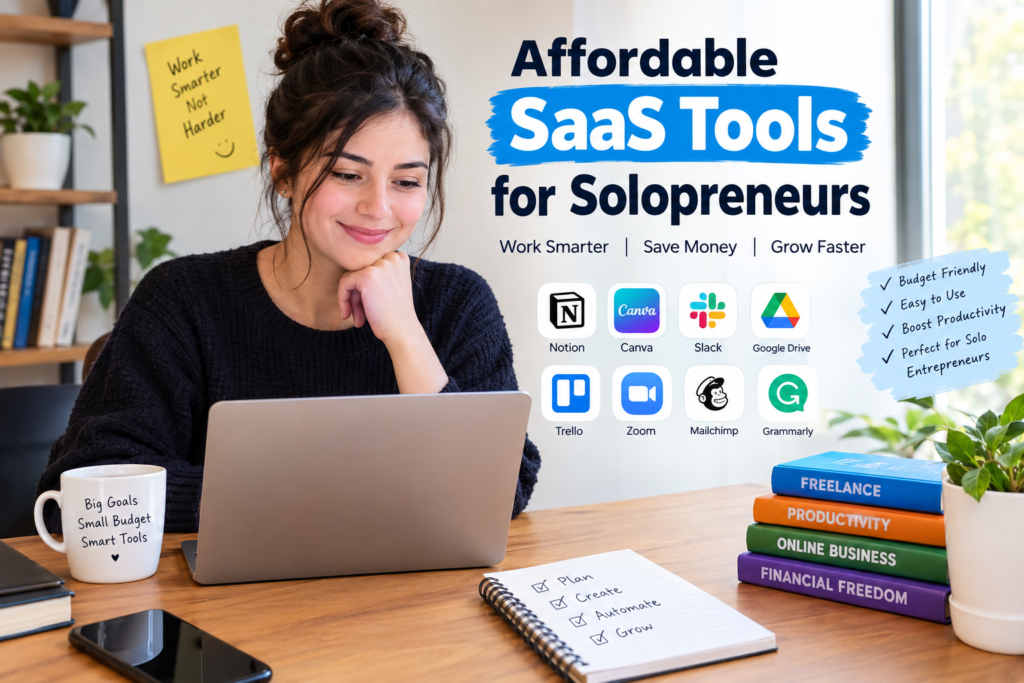
In this guide, I will discuss some affordable SaaS tools for solopreneurs that can help with productivity, marketing, communication, project management, and business operations.
Why Solopreneurs Need Affordable SaaS Tools
When running a one person business, time and money are two of the most valuable resources. Unlike large companies, solopreneurs usually cannot afford separate employees for marketing, customer support, accounting, and administration.
Affordable SaaS software helps manage these responsibilities from one computer or smartphone.
Some important benefits include:
- Saving time through automation.
- Managing business activities from one place.
- Reducing unnecessary operational expenses.
- Improving communication with customers.
- Organizing daily tasks more efficiently.
- Supporting business growth without hiring a large team.
I personally believe that even a small improvement in daily productivity can make a meaningful difference over time.
Best Affordable SaaS Tools for Solopreneurs
1. Notion for Business Organization

Notion is a flexible productivity platform that allows solopreneurs to organize notes, projects, documents, calendars, and business information.
When managing several projects alone, it is easy to forget important details. Notion provides a central workspace where I can keep everything organized.
Its free plan can be useful for individuals who want to manage personal projects and business tasks without paying immediately.
Main features:
- Task and project management
- Business notes and documentation
- Custom databases
- Personal planning
- Templates for daily workflows
For beginners, Notion can replace several basic productivity applications with one organized workspace.
Website:
Official Notion Website
2. Canva for Affordable Graphic Design

Visual content plays an important role in online business. Whether I am creating social media posts, blog graphics, presentations, or marketing materials, professional design can improve how a brand looks.
Canva makes graphic design easier for people who do not have professional design experience.
Its free version offers many useful templates and design features, making it a practical option for solopreneurs with limited budgets.
Main features:
- Social media designs
- Presentation templates
- Marketing graphics
- Basic photo editing
- Brand design resources
I find Canva particularly useful for small business owners who want attractive visuals without hiring a designer for every project.
Website:
Official Canva Website
3. Trello for Project Management

Trello is a project management tool that uses boards, lists, and cards to organize work.
For a solopreneur, managing multiple responsibilities can become confusing. Trello provides a visual way to track what needs to be done, what is currently in progress, and what has been completed.
Its free plan provides a starting point for personal task management.
Main features:
- Visual task boards
- Project tracking
- Due dates
- Checklists
- Workflow organization
For example, a freelance writer can create separate boards for article ideas, ongoing assignments, completed content, and client revisions.
Website:
Official Trello Website
4. Google Workspace for Daily Business Tasks

Google provides several useful online tools for writing, spreadsheets, file storage, and communication.
Google Docs, Sheets, Drive, and Calendar can help solopreneurs handle everyday business activities without immediately investing in premium software.
Some services have free personal access, while business features and additional storage may require payment.
Main features:
- Online document creation
- Spreadsheet management
- Cloud file storage
- Calendar scheduling
- File sharing
I consider these tools useful for managing invoices, preparing proposals, storing documents, and organizing business schedules.
Website:
Official Google Workspace Website
5. Mailchimp for Email Marketing

Email marketing is an important part of building long term relationships with customers.
Mailchimp helps solopreneurs create email campaigns, manage subscribers, and organize marketing activities.
Its available plans and limits can change, so I recommend checking the current pricing before selecting a subscription.
Main features:
- Email campaign creation
- Subscriber management
- Marketing automation
- Email templates
- Campaign reporting
For a small online business, email marketing can provide a direct communication channel without depending entirely on social media platforms.
Website:
Official Mailchimp Website
6. HubSpot CRM for Customer Management

Customer management becomes more important as a business grows. Remembering every conversation, follow up, and potential customer manually is not always practical.
HubSpot CRM offers tools for organizing contacts, tracking customer interactions, and managing sales activities.
Its free CRM features make it worth exploring for solopreneurs who want to improve their customer management process.
Main features:
- Contact management
- Customer interaction history
- Deal tracking
- Sales pipeline organization
- Basic reporting
For freelancers and consultants, a CRM can help ensure that potential customers do not get forgotten.
Website:
Official HubSpot CRM Website
7. Grammarly for Professional Writing

Written communication is part of almost every online business. Emails, proposals, blog posts, and website content should be clear and easy to understand.
Grammarly provides writing suggestions that can help improve grammar, spelling, punctuation, and clarity.
Its free version is useful for basic writing assistance, while advanced features are available through paid plans.
Main features:
- Grammar suggestions
- Spelling checks
- Punctuation assistance
- Writing clarity suggestions
- Communication support
I find writing assistants helpful when preparing professional emails or reviewing content before publishing.
Website:
Official Grammarly Website
8. Wave for Basic Accounting

Managing business finances is essential, even when operating on a small scale.
Wave provides accounting and invoicing features designed for small businesses and independent professionals. Availability and pricing of particular services depend on location and plan.
Main features:
- Invoice creation
- Income tracking
- Expense organization
- Financial reports
- Customer billing
For solopreneurs, keeping financial records organized can make tax preparation and business planning easier.
Before choosing accounting software, I recommend checking whether its features support your country’s tax and invoicing requirements.
Website:
Official Wave Website
9. Calendly for Appointment Scheduling

If I offer consulting, coaching, or freelance services, scheduling meetings manually can consume valuable time.
Calendly allows customers to select available meeting times through a booking page.
Its free plan supports basic scheduling needs, while additional features are available through paid subscriptions.
Main features:
- Online booking pages
- Calendar availability
- Meeting scheduling
- Automated confirmations
- Calendar integrations
This type of software is especially useful for service based businesses that regularly communicate with clients.
Website:
Official Calendly Website
10. Buffer for Social Media Management

Social media marketing can become time consuming when managing several platforms.
Buffer helps solopreneurs plan and schedule content from a central dashboard. Its free plan can be suitable for getting started, subject to current channel and feature limits.
Main features:
- Social media scheduling
- Content planning
- Publishing calendar
- Post management
- Performance insights
Instead of creating posts every day, I can prepare content in advance and organize a more consistent publishing routine.
Website:
Official Buffer Website
How to Choose Affordable SaaS Tools for Your Business
Choosing affordable SaaS tools for solopreneurs requires more than comparing subscription prices.
I recommend considering the following factors before purchasing any software.
Understand Your Actual Business Needs
Start by identifying the tasks that consume most of your time. If project organization is your biggest challenge, consider a project management tool before investing in advanced marketing software.
Check Free Plans First
Many SaaS companies offer free plans or trials. These options allow you to understand the interface and features before committing to monthly payments.
Compare Monthly and Annual Pricing
Some platforms offer discounted annual subscriptions. However, I suggest starting with monthly billing when testing a new tool because it provides more flexibility.
Avoid Unnecessary Features
Premium features can look attractive, but they are not always essential for a one person business.
Choose software based on the features you will actually use rather than the number of features advertised.
Consider Integrations
Tools that connect with your existing applications can reduce repetitive work. For example, connecting a scheduling platform with your calendar can simplify appointment management.
Common SaaS Mistakes Solopreneurs Should Avoid
One mistake I often notice among new entrepreneurs is subscribing to too many tools at the beginning.
A collection of expensive applications does not automatically create a productive business.
Here are some mistakes worth avoiding:
- Paying for software without testing it.
- Choosing complicated platforms for simple tasks.
- Ignoring subscription renewal dates.
- Using several applications for the same purpose.
- Forgetting to review monthly software expenses.
- Selecting tools without checking data security.
A simple software setup is often easier to manage than a complicated collection of subscriptions.
My Suggested Affordable SaaS Stack for Beginners
If I were starting a one person business with a limited budget, I would begin with a small collection of tools.
| Business Need | Suggested Tool |
|---|---|
| Task Management | Notion |
| Graphic Design | Canva |
| Project Tracking | Trello |
| Documents | Google Docs |
| Email Marketing | Mailchimp |
| Customer Management | HubSpot CRM |
| Writing Assistance | Grammarly |
| Accounting | Wave |
| Appointment Booking | Calendly |
| Social Media | Buffer |
You do not need to subscribe to every premium plan immediately. Start with the free features where available and upgrade only when your business requirements justify the expense.
Final Thoughts
Affordable SaaS tools for solopreneurs can make running a small business more organized, manageable, and productive.
From project management and customer communication to accounting and marketing, the right software can reduce repetitive work and help you focus on activities that support business growth.
My personal approach is to keep things simple. I would rather use five tools consistently than pay for fifteen applications that I rarely open.
Start with your biggest business challenge, explore free plans, compare features, and monitor your monthly expenses. As your business grows, you can gradually introduce more advanced software.
The goal is not to spend more money on technology. The goal is to use technology wisely, protect your time, and build a sustainable business.