When I first started working on different projects, I thought managing tasks was mostly about making a simple to do list. With time, I realized that project management can become complicated very quickly. When several people are working together, there are deadlines, meetings, files, updates, client requests, and many small tasks that need attention. This is where project management SaaS tools can make a big difference.
SaaS means Software as a Service. In simple words, it means you can use software online without installing complicated programs on your computer. Most project management SaaS platforms work through a web browser and also offer mobile applications. I personally like this approach because I can access my projects from almost anywhere.
There are many project management tools available today, and choosing the best one can be confusing. Every platform has different features, pricing plans, and ways of organizing work. In my opinion, the best project management SaaS is not necessarily the one with the most features. The best tool is the one that fits your working style and makes your daily work easier.
What Is Project Management SaaS
Project management SaaS is online software designed to help individuals and teams plan, organize, track, and complete projects. Instead of keeping everything in notebooks, spreadsheets, emails, and different applications, you can manage most project activities from one place.
A typical project management SaaS platform can include task management, calendars, team communication, file sharing, time tracking, project planning, reporting, and progress tracking.
For example, if I am working on a website project, I can create tasks for research, design, content writing, development, testing, and publishing. I can then assign those tasks to different team members and set deadlines.
This simple system can save a lot of time because everyone knows what they are responsible for.
Why I Think Project Management SaaS Is Important
The biggest benefit I see is organization. When work is scattered across emails and messages, it becomes difficult to remember what needs to be done. A good project management tool puts important information in one place.
Another benefit is visibility. I can quickly see which tasks are completed, which tasks are still pending, and where a project might be delayed.
Communication is another important part. Instead of sending several messages asking about project updates, team members can update tasks directly inside the project management platform.
This can make teamwork much smoother.
I also believe these tools are useful for individuals. You do not need to manage a large company to benefit from project management software. Freelancers, bloggers, students, developers, designers, and small business owners can all use these platforms to stay organized.
ClickUp
ClickUp is one of the project management SaaS platforms I would consider when I need many features in one place. It offers task management, documents, goals, calendars, dashboards, and several ways to organize projects.
What I like about ClickUp is its flexibility. Different people can organize their workspace according to their needs. A marketing team might use it differently from a software development team.
The large number of features can also be a disadvantage for beginners. When a platform has many options, it can take some time to understand everything.
For teams that want a powerful and customizable platform, I think ClickUp is worth considering.
Asana
Asana is another popular project management platform. I find its approach easy to understand because projects and tasks are clearly organized.
You can create projects, add tasks, assign responsibilities, set deadlines, and track progress. It is particularly useful for teams that need a clear overview of ongoing work.
One thing I like about Asana is that it can help reduce confusion. When everyone knows what they need to do and when they need to complete it, projects can move forward more smoothly.
I think Asana is a good choice for companies and teams that want a professional project management system without making their workflow unnecessarily complicated.
Trello
Trello is one of the simplest project management tools on my list. Its board based design makes it easy to understand.
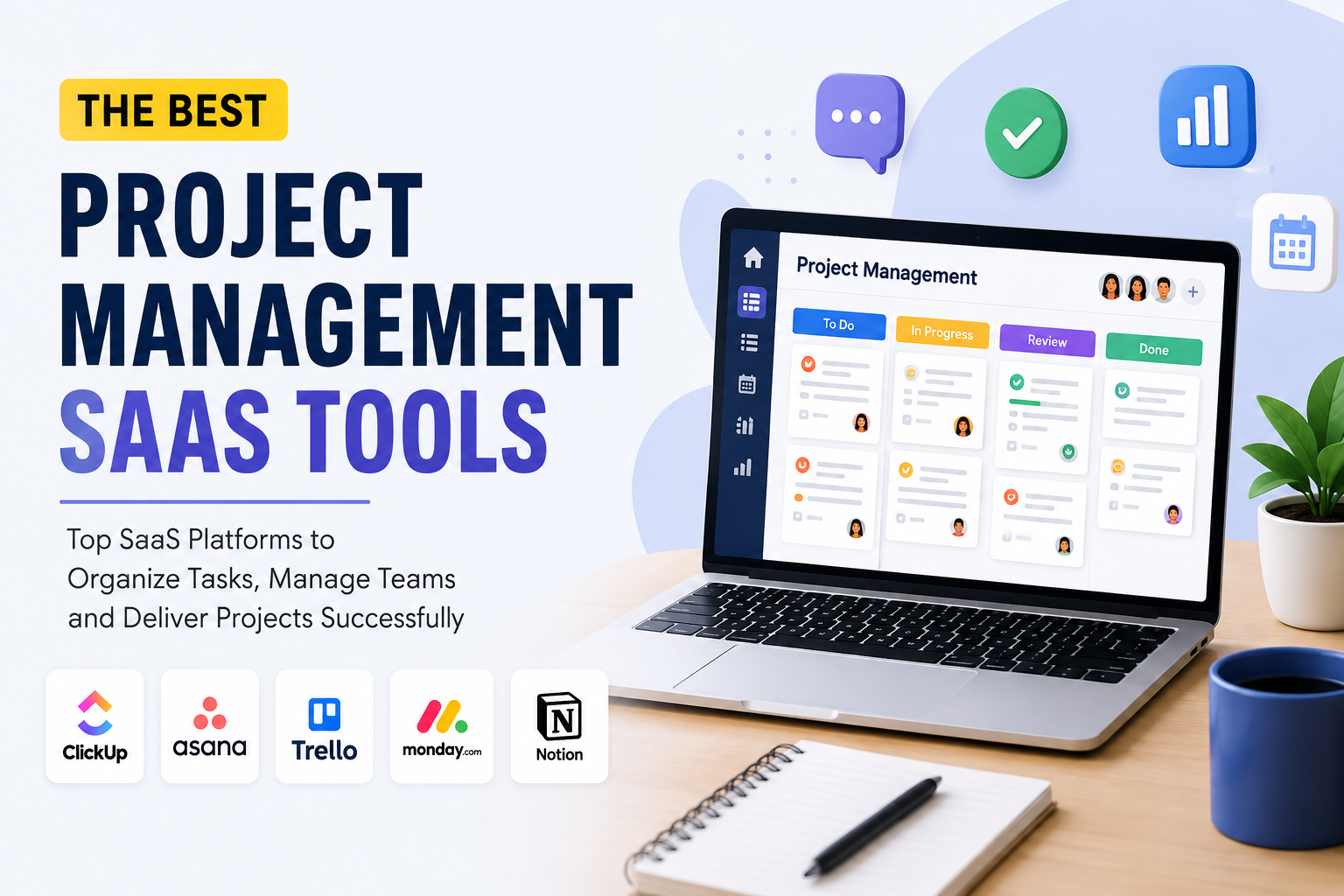
Tasks are usually represented as cards, and these cards can be moved between different columns. For example, you might have columns called To Do, In Progress, Review, and Completed.
I personally think this style is excellent for people who prefer visual organization. You can look at the board and immediately understand the current state of your work.
Trello may not be the best option for extremely complicated projects that require advanced project planning, but for simple workflows, content calendars, personal projects, and small teams, it can be very useful.
Monday.com
Monday.com is another platform that combines project management with team collaboration. It provides a visual workspace where teams can organize tasks, projects, deadlines, and responsibilities.
One thing that stands out to me is the visual nature of the platform. Information can be displayed in tables, boards, timelines, and other views.
I think this can be helpful for businesses that want to see project information clearly without going through long lists of emails or documents.
Monday.com can also be useful for different types of teams because the platform can be customized for various workflows.
Notion
I see Notion as a flexible option for people who want project management along with note taking and documentation.
Notion can be used to create task lists, project pages, company documents, content calendars, meeting notes, and knowledge bases.
What I like most about Notion is the freedom it provides. You can create a workspace that matches the way you think and work.
However, this freedom can also require more effort. Some people may prefer a ready made project management system instead of building their own workspace.
For freelancers, creators, small teams, and people who enjoy customizing their workspaces, Notion can be a strong choice.
What Features Should You Look For
When I choose project management software, I do not look only at the number of features. I first think about what I actually need.
Task management is one of the most important features. The software should make it easy to create tasks, assign them, set deadlines, and mark them as completed.
Team collaboration is also important if multiple people are involved. Comments, file sharing, notifications, and mentions can make communication much easier.
I also recommend looking for calendar and timeline features if your projects have many deadlines.
Another important feature is reporting. If I am managing a larger project, I want to know how much work has been completed and whether the project is moving according to plan.
Mobile access is also useful. I do not always work from my computer, so having access through a smartphone can be convenient.
Free Plans Versus Paid Plans
Many project management SaaS platforms offer free plans. I think free plans are a great way to test a platform before spending money.
If you are a freelancer or a small team, a free plan might provide everything you need. However, larger teams may eventually need features available only in paid plans.
Before paying for a subscription, I recommend checking exactly what is included. Sometimes a cheaper plan looks attractive but does not include an important feature your team needs.
I personally believe it is better to choose a simple plan that covers your actual requirements instead of paying for advanced features you will never use.
How I Would Choose the Best Project Management SaaS
If I had to choose a project management platform, I would first define the type of work I am doing.
For simple visual task management, I would look at Trello.
For structured team projects, I would consider Asana.
For advanced customization and many features, I would consider ClickUp.
For visual business workflows, Monday.com would be worth exploring.
For flexible notes, documents, and project organization, I would consider Notion.
The important thing is that there is no single tool that is perfect for everyone.
Common Mistakes When Choosing Project Management Software
One mistake I see people make is choosing software only because it has many features. More features do not always mean better results.
Another mistake is moving between tools too frequently. Every time a team changes its project management system, people need time to learn the new platform and adjust their workflow.
I also think people sometimes forget about ease of use. If a tool is too complicated, team members may stop using it properly.
The best software should make work simpler, not create another problem for the team.
Final Thoughts
In my opinion, the best project management SaaS is the platform that helps you stay organized without making your work unnecessarily difficult.
ClickUp, Asana, Trello, Monday.com, and Notion are all useful options, but each one has a different approach. The right choice depends on your projects, team size, budget, and personal working style.
I would always recommend trying a platform before committing to a long term subscription. Create a real project, add some tasks, invite your team if necessary, and see how the software feels during normal work.
For me, good project management software should save time, improve communication, and give me a clear picture of what needs to happen next. If a tool can do those things without creating unnecessary complexity, I consider it a good investment.
The goal should never be to use the most advanced software available. The goal should be to complete better work with less confusion. That is what makes a project management SaaS platform genuinely valuable.