Managing money is one of the most important parts of working as a freelancer. When I started exploring freelance business management, I realized that earning money is only one part of the process. Tracking payments, sending invoices, managing expenses, and preparing for taxes are equally important.
Many freelancers work with multiple clients, different payment methods, and changing monthly income. Keeping everything organized in spreadsheets or notebooks can become confusing over time. This is where the best cloud based accounting software for freelancers can make a real difference.
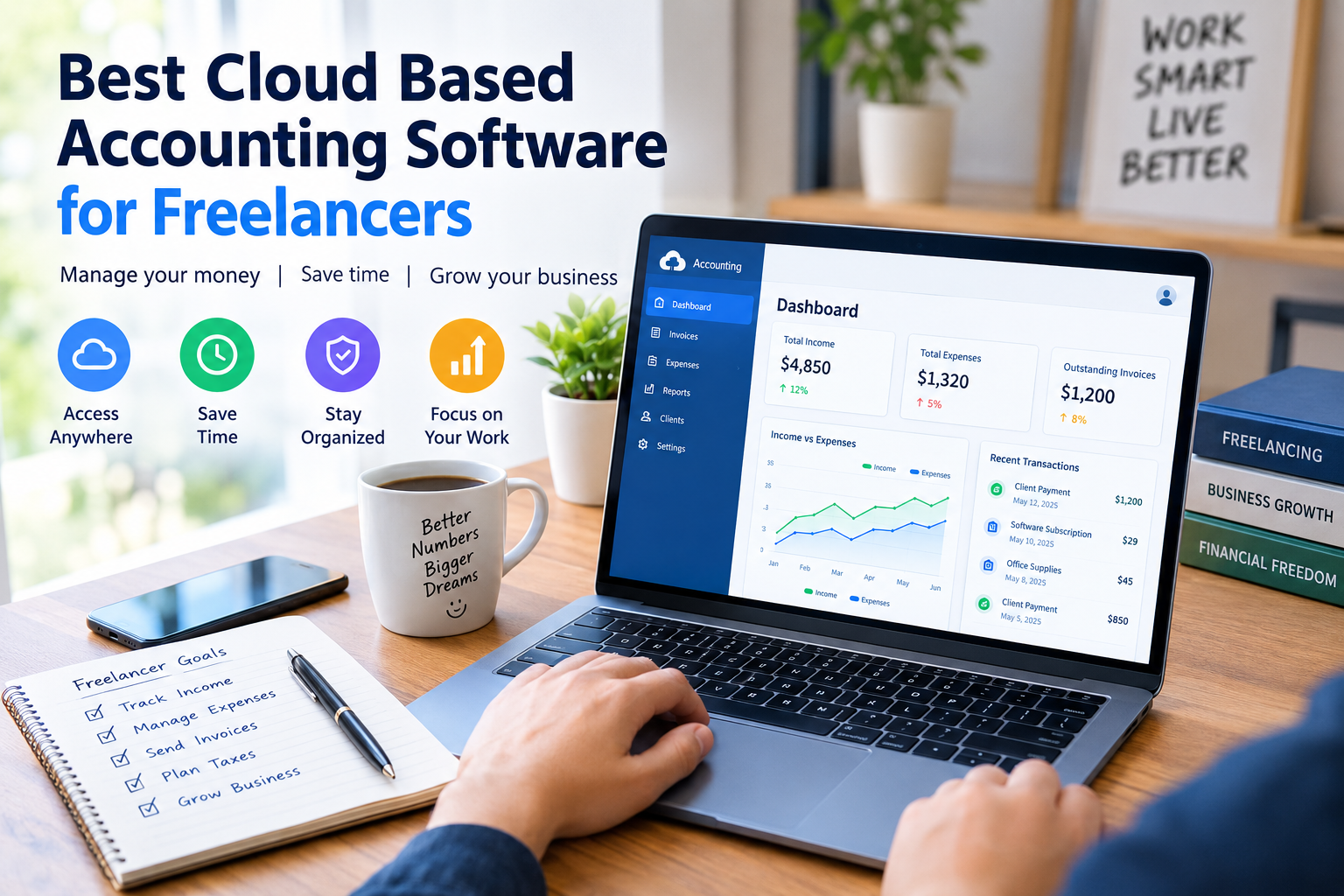
Cloud accounting software allows freelancers to manage financial records online without depending on a single computer. Whether you work from home, a coworking space, or while traveling, you can access your financial information whenever you need it.
In this article, I will discuss some popular cloud accounting tools for freelancers, their features, pricing considerations, and how to choose software that fits your working style.
What Is Cloud Based Accounting Software?
Cloud based accounting software is an online financial management system that stores your accounting information securely on remote servers.
Instead of installing traditional accounting programs on your computer, you can access the software through a web browser or mobile application.
For freelancers, this means managing invoices, expenses, income, and financial reports from almost anywhere.
Most cloud accounting platforms offer features such as:
- Online invoicing
- Income and expense tracking
- Financial reporting
- Payment reminders
- Bank transaction management
- Tax preparation tools
- Mobile access
In my opinion, the biggest advantage is convenience. Freelancers usually have limited time for administrative work, so having financial information organized in one place can make daily business management easier.
Best Cloud Based Accounting Software for Freelancers
There are several accounting platforms available today, but not every tool is suitable for independent professionals.
Some focus on invoicing, while others provide complete bookkeeping and financial management features.
Here are some popular options worth considering.
1. FreshBooks

FreshBooks is a cloud accounting platform designed with freelancers, consultants, and small service businesses in mind.
One thing I appreciate about FreshBooks is its focus on simplicity. Freelancers who do not have an accounting background can use its interface to manage essential financial tasks.
Key Features
- Professional invoice creation
- Expense tracking
- Time tracking
- Recurring invoices
- Payment reminders
- Financial reports
- Client management
FreshBooks is particularly useful for freelancers who charge clients by the hour. Its time tracking features help connect working hours with invoices.
For example, a freelance graphic designer can record project hours, generate an invoice, and monitor payment status without switching between several applications.
Pricing
FreshBooks offers paid subscription plans, with prices and included features varying by plan and promotional offer.
My Opinion
I would consider FreshBooks for freelancers who want invoicing and accounting features together without dealing with an overly complicated system.
2. QuickBooks Online

QuickBooks Online is a widely used accounting platform for freelancers, independent contractors, and growing businesses.
It provides several financial management features that can help freelancers maintain organized records as their business grows.
Key Features
- Income and expense tracking
- Invoice creation
- Bank transaction synchronization
- Profit and loss reports
- Tax related reports
- Receipt management
- Financial data access across devices
One useful feature is bank transaction synchronization, where supported financial institutions can connect with the platform.
This can reduce manual data entry and make it easier to review business transactions.
Pricing
QuickBooks Online uses subscription based pricing. The available plans, features, and promotional rates depend on the market.
My Opinion
QuickBooks Online may suit freelancers who have multiple income sources, regular expenses, or plans to expand into a small agency.
However, beginners should compare the monthly subscription cost with the features they actually need.
3. Wave Accounting

Wave is an accounting solution that has attracted freelancers and small business owners who want to control their software expenses.
Its availability and features vary by country, so international freelancers should check whether the services they need are supported in their location.
Key Features
- Income tracking
- Expense management
- Invoice creation
- Financial reporting
- Receipt management
- Online payment options in supported markets
Wave can be useful for freelancers who are just starting and do not want to pay for a large accounting package immediately.
For example, a freelance content writer can use accounting software to record client payments, organize expenses, and review monthly income.
Pricing
Wave offers a free accounting option in supported markets, while certain payment and additional services may involve fees.
My Opinion
For freelancers with straightforward financial needs, Wave is worth exploring before committing to a more expensive subscription.
4. Xero

Xero is another cloud based accounting platform designed for small businesses and independent professionals.
It offers financial management features that can help freelancers maintain better visibility into their business finances.
Key Features
- Online invoicing
- Expense tracking
- Bank reconciliation
- Financial reporting
- Bill management
- Multi currency accounting
- Integration with business applications
One feature that may be particularly helpful for freelancers working internationally is multi currency support, depending on the selected plan.
If you work with clients in different countries, tracking transactions in multiple currencies can help keep financial records organized.
Pricing
Xero provides multiple subscription plans, and the included features depend on the selected package and region.
My Opinion
I would consider Xero for freelancers who work with international clients or expect their financial management requirements to become more advanced.
5. Zoho Books

Zoho Books is an online accounting platform that offers invoicing, expense tracking, financial reports, and automation features.
It can be particularly useful for freelancers who already use other applications from the Zoho ecosystem.
Key Features
- Custom invoices
- Expense categorization
- Automated payment reminders
- Client management
- Financial reports
- Recurring transactions
- Online accounting access
The automation features can help reduce repetitive work.
For instance, freelancers can configure recurring invoices for clients who pay a fixed monthly amount, subject to their plan’s available features.
Pricing
Zoho Books offers different plans, including free or paid options depending on region and eligibility.
My Opinion
Zoho Books is worth considering if you want accounting software that can connect with other business tools as your freelance work expands.
6. Bonsai

Bonsai is a business management platform created with freelancers and independent professionals in mind.
Unlike traditional accounting software that focuses mainly on bookkeeping, Bonsai combines financial tasks with parts of the client management process.
Key Features
- Invoicing
- Client management
- Proposals and contracts
- Expense tracking
- Project management features
- Payment tracking
- Financial organization
For freelancers who manage multiple projects, having client documents and payment information connected can simplify administration.
Pricing
Bonsai primarily offers paid subscription plans, with available features depending on the package.
My Opinion
I would explore Bonsai if you want to manage invoices, client relationships, and other freelance business activities through one platform.
Comparison of the Best Cloud Accounting Software
| Software | Suitable For | Main Strength |
|---|---|---|
| FreshBooks | Service freelancers | Invoicing and time tracking |
| QuickBooks Online | Growing freelance businesses | Accounting features |
| Wave | Budget conscious beginners | Accessible accounting tools |
| Xero | International freelancers | Multi currency capabilities |
| Zoho Books | Freelancers using business apps | Automation and integration |
| Bonsai | Independent professionals | Client and business management |
The right option depends on your workload, budget, country, and accounting requirements.
Why Freelancers Need Cloud Accounting Software
When working independently, you are responsible for both earning income and maintaining financial records.
Without a proper system, small financial tasks can become difficult to manage.
Here are some reasons why cloud accounting software is useful.
Better Income Tracking
Freelancers often receive payments from different clients at different times.
Accounting software helps record payments and identify outstanding invoices.
This makes it easier to understand how much money your freelance business is generating.
Easier Expense Management
Business expenses may include internet bills, software subscriptions, equipment, advertising, and professional services.
Recording these expenses regularly helps you understand your actual business costs.
It can also make tax preparation more organized.
Professional Invoicing
A professional invoice creates a clear record of the services provided and the amount owed.
Many accounting platforms allow you to customize invoices, add payment terms, and send payment reminders.
This can help reduce unnecessary communication with clients.
Access From Anywhere
Cloud accounting platforms allow users to access financial information through supported web browsers and mobile applications.
This is helpful for freelancers who travel or work with clients in different locations.
Improved Financial Planning
Financial reports can help you review income, expenses, and business performance.
Instead of guessing whether your freelance business is growing, you can use recorded information to understand financial trends.
How to Choose the Best Cloud Based Accounting Software for Freelancers
Before selecting an accounting platform, I recommend considering the following factors.
1. Understand Your Budget
If you are a beginner, paying for advanced accounting features may not be necessary.
Start by identifying the essential features you need.
Compare monthly subscription costs, annual billing, transaction fees, and possible upgrade expenses.
2. Check Invoicing Features
Invoicing is one of the most important tasks for freelancers.
Look for customizable invoice templates, automatic reminders, payment tracking, and recurring invoice options.
3. Consider Your Country
Not every accounting platform supports every country equally.
Before subscribing, check payment availability, supported currencies, local tax features, and bank integrations.
This is particularly important for freelancers working internationally.
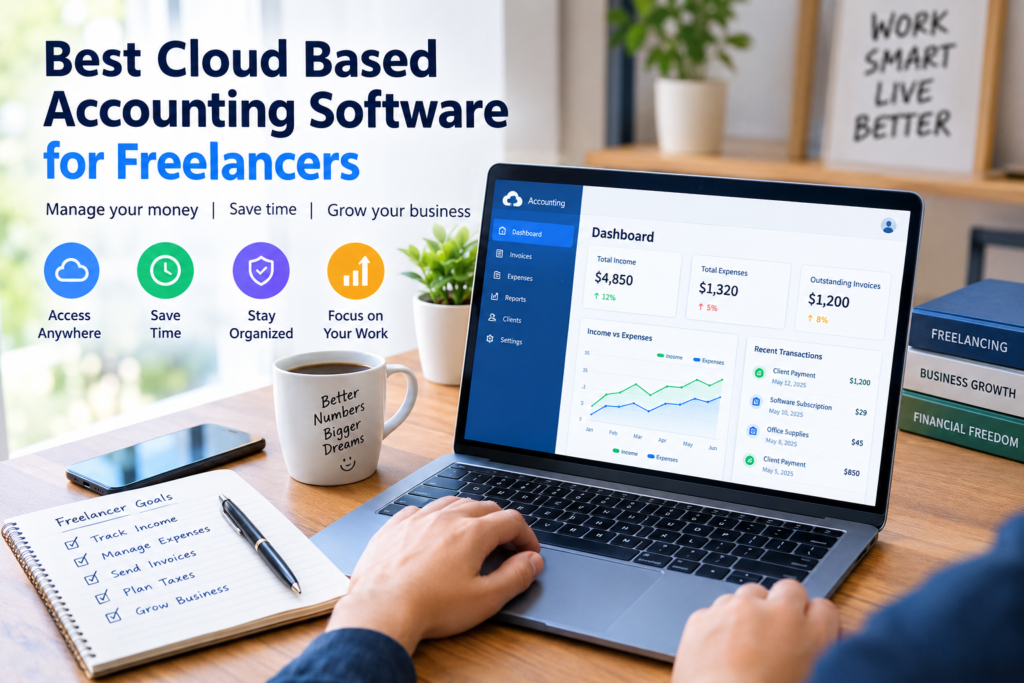
4. Look for Easy Navigation
Accounting software should simplify financial management rather than make it more confusing.
If the dashboard is difficult to understand, you may avoid updating your records regularly.
A simple interface can make a meaningful difference.
5. Review Security Features
Your accounting platform may contain sensitive financial information.
Look for security features such as encryption, multi factor authentication, access controls, and reliable backup practices.
Also review the provider’s privacy policy.
Common Mistakes Freelancers Should Avoid
Even with accounting software, freelancers can make mistakes that affect their financial organization.
Some common examples include:
- Mixing personal and business expenses
- Forgetting to record cash transactions
- Ignoring unpaid invoices
- Waiting until tax season to organize receipts
- Choosing expensive software without reviewing actual needs
- Failing to review monthly financial reports
My recommendation is to spend a few minutes every week updating your financial records.
This small habit can prevent a large amount of administrative work later.
Is Free Cloud Accounting Software Enough for Freelancers?
Free accounting software can be sufficient for freelancers with simple financial activities.
If you only manage a few clients, send occasional invoices, and record basic expenses, a free plan may cover your requirements.
However, as your business grows, you may need advanced reporting, automated workflows, additional users, or integrations.
At that point, upgrading to a paid subscription may become useful.
The important thing is to choose software based on actual business needs rather than paying for features you may never use.
Final Thoughts
Choosing the best cloud based accounting software for freelancers is an important step toward building a more organized freelance business.
Tools like FreshBooks, QuickBooks Online, Wave, Xero, Zoho Books, and Bonsai provide different approaches to financial management.
Some focus on simple invoicing, while others offer more advanced accounting and business management features.
Personally, I believe freelancers should prioritize three things when selecting accounting software: ease of use, affordable pricing, and reliable financial tracking.
You do not need the most expensive platform to manage your freelance finances effectively. You need a tool that fits your workflow and helps you stay consistent.
Start with your current requirements, explore available plans, and choose a platform that can support your business as it grows.
When your financial records are organized, you can spend less time managing paperwork and more time focusing on clients, projects, and new business opportunities.