When I started looking into accounting software, I realized that managing business finances manually can become complicated very quickly. Keeping track of income, expenses, invoices, taxes, payments, and reports takes a lot of time. For a small business owner, spending hours every week on accounting is not always practical.
This is where Accounting SaaS software can make a big difference. SaaS means Software as a Service, which basically means you can use the accounting software online without installing complicated programs on your computer. Most platforms also save your information in the cloud, so you can access your financial data from different devices.
In my opinion, the best accounting SaaS is not necessarily the one with the most features. The best option is the one that makes accounting easier, saves time, provides accurate reports, and fits the way a business actually works.
There are many accounting platforms available today, so choosing one can feel confusing. In this article, I will share some of the best Accounting SaaS software options and explain what I like about each one.
1. QuickBooks Online
QuickBooks Online is one of the first accounting SaaS platforms that comes to my mind. It is widely used by small businesses, freelancers, and growing companies. I personally like it because it provides a good balance between useful accounting features and ease of use.
With QuickBooks Online, businesses can track income and expenses, create invoices, manage bills, monitor cash flow, and prepare financial reports. It also allows users to connect their bank accounts, which can make transaction management much easier.
One feature I find particularly useful is automatic transaction categorization. Instead of manually entering every transaction, the software can help organize financial activity into appropriate categories.
QuickBooks Online also provides reports that can help business owners understand how their company is performing. For someone who wants a complete accounting solution without managing everything manually, I think it is one of the strongest choices.
2. Xero
Xero is another Accounting SaaS platform that I would consider for a modern business. Its interface feels clean and professional, and it offers many tools for businesses that want to manage their finances online.
Xero allows users to send invoices, track expenses, reconcile bank transactions, manage bills, and view financial reports. One thing I particularly like about Xero is its collaboration features.
A business owner can give an accountant or bookkeeper access to the account without needing to send files back and forth. This can make communication much easier.
Xero is also designed to work well for businesses that are growing. As the company becomes more complicated, having accounting software that can handle more transactions and users becomes increasingly important.
For businesses that want strong accounting features combined with cloud accessibility, I think Xero is worth considering.
3. FreshBooks
FreshBooks is a platform I would recommend especially to freelancers, consultants, and service based businesses. Its main strength, in my opinion, is simplicity.
Not every business needs complicated accounting software. Some people mainly need to create professional invoices, track expenses, manage clients, and monitor payments. FreshBooks focuses heavily on these areas.
The invoicing system is particularly useful. You can create invoices, send them to clients, and keep track of whether they have been paid. This can save a lot of time compared with creating invoices manually.
FreshBooks also includes expense tracking and time tracking features. For freelancers who charge clients based on hours, this can be extremely helpful.
I think FreshBooks is a good choice for someone who wants accounting software that feels straightforward rather than overwhelming.
4. Zoho Books
Zoho Books is another Accounting SaaS platform that deserves attention. It is part of the larger Zoho ecosystem, which includes many business applications.
What I like about Zoho Books is that it can work especially well for businesses already using other Zoho products. Having different business tools connected together can make daily operations more organized.
Zoho Books offers invoicing, expense tracking, bank reconciliation, inventory management, tax management, and financial reporting. It also provides automation features that can reduce repetitive accounting work.
For example, businesses can automate certain invoice reminders and recurring transactions. I believe these small automations can make a noticeable difference over time.
The platform is suitable for small businesses and can also support companies that are growing and need more advanced accounting functionality.
5. Wave Accounting
Wave Accounting is an interesting option for freelancers and very small businesses because it focuses on providing essential accounting tools without making things unnecessarily complicated.
For someone who is just starting a small business, accounting software can sometimes feel like another expense to worry about. Wave can be attractive because it provides useful financial management features for small business users.
You can use it to manage income and expenses, create invoices, and keep track of basic financial information.
In my opinion, Wave is best for people who do not need advanced accounting features. If your business is relatively simple, there is no reason to pay for a complicated system filled with features you will never use.
However, as a business grows, it is important to check whether the platform still provides everything you need.
6. Sage Accounting
Sage Accounting is another established option for businesses that want reliable accounting software. It provides tools for managing invoices, expenses, cash flow, taxes, and financial reports.
What I like about Sage is its focus on business accounting. It is not simply an invoicing application. It provides a broader set of financial management tools.
Sage can also be useful for businesses that need to keep better control over their financial records. Having accurate information available through an online platform can help business owners make better decisions.
I would consider Sage for a small or medium sized business that wants accounting software with a professional approach and room to handle more complex financial needs.
7. NetSuite
When we talk about larger businesses, NetSuite becomes an interesting option. It is much more than basic accounting software because it provides a broader business management platform.
NetSuite can support financial management, inventory, customer relationships, purchasing, and other business processes. This makes it more suitable for companies that have outgrown simple accounting tools.
Personally, I would not recommend NetSuite to a freelancer or a very small business because it may offer far more functionality than they actually need. However, for a growing company with complex operations, having different business functions connected in one system can be extremely valuable.
The biggest advantage is having a centralized view of business information. Instead of using several disconnected systems, companies can manage many processes through one platform.
What Makes the Best Accounting SaaS?
After looking at these platforms, I think there are several important things businesses should consider before choosing accounting software.
The first thing is ease of use. Accounting is already complicated enough, so the software should make the process easier rather than harder.
The second factor is automation. I personally think automation is one of the biggest advantages of modern SaaS accounting platforms. Automatic bank feeds, recurring invoices, payment reminders, and transaction categorization can save a lot of time.
Security is also extremely important. Accounting software stores sensitive financial information, so businesses should choose a provider that takes data protection seriously.
Another important factor is scalability. A platform that works perfectly for a freelancer may not be suitable when the business has employees, inventory, multiple locations, or larger transaction volumes.
Integration is also something I would not ignore. Accounting software should ideally connect with payment platforms, banks, payroll systems, ecommerce platforms, and other tools used by the business.
My Final Thoughts
In my opinion, there is no single Accounting SaaS platform that is perfect for every business. The right choice depends on the size of the company, budget, accounting requirements, and the type of work being done.
For an all around solution, I would look closely at QuickBooks Online and Xero. For freelancers and service based businesses, FreshBooks can be a simple and practical option. Zoho Books makes sense for businesses that want strong integration with the Zoho ecosystem. Wave can be useful for people who want basic accounting tools without unnecessary complexity. Sage is worth considering for businesses that want professional accounting features, while NetSuite is more suitable for larger organizations with complex operations.
Personally, I believe the biggest benefit of Accounting SaaS is convenience. Instead of depending completely on spreadsheets and paperwork, business owners can have their financial information organized in one place and access it whenever they need it.
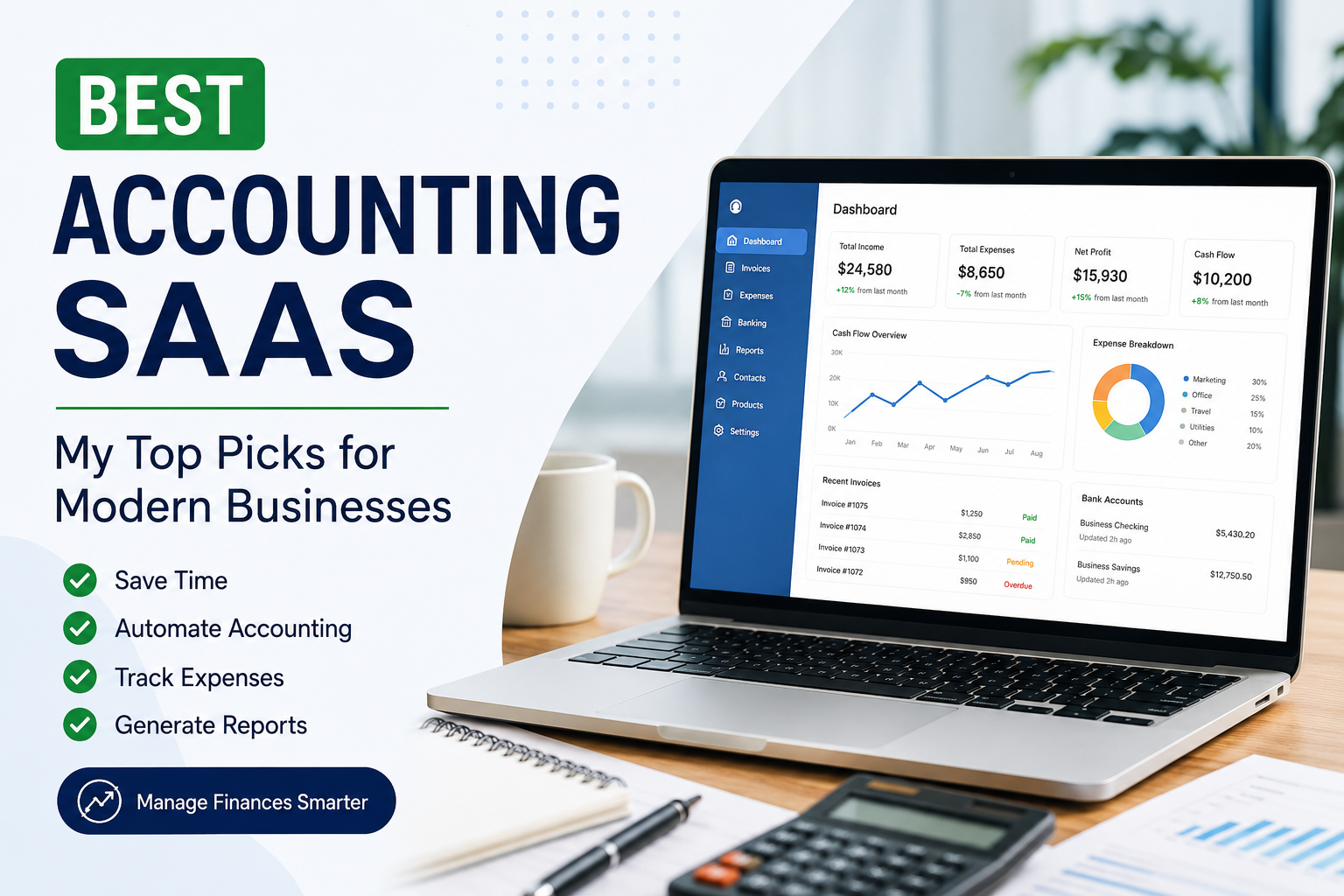
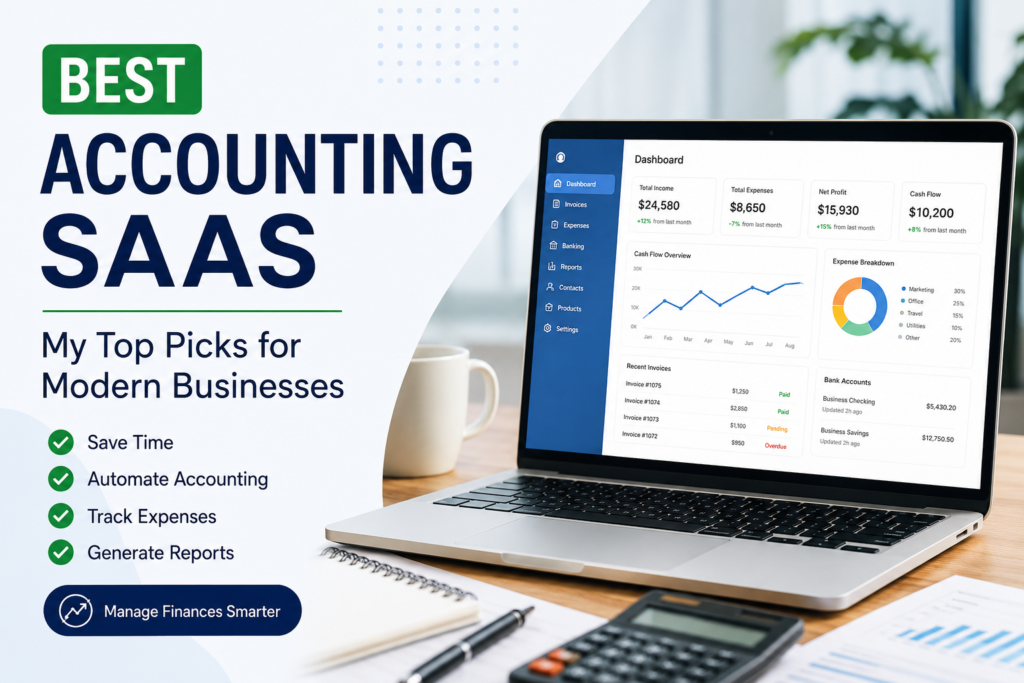
Good accounting software can also help business owners understand where their money is going. When you can clearly see your income, expenses, unpaid invoices, and cash flow, making business decisions becomes much easier.
Before choosing any platform, I would recommend thinking about your actual needs instead of simply choosing the software with the longest feature list. More features do not always mean better results.
For me, the best Accounting SaaS is the one that saves time, reduces mistakes, keeps financial information organized, and allows me to focus more on growing the business instead of constantly worrying about bookkeeping.