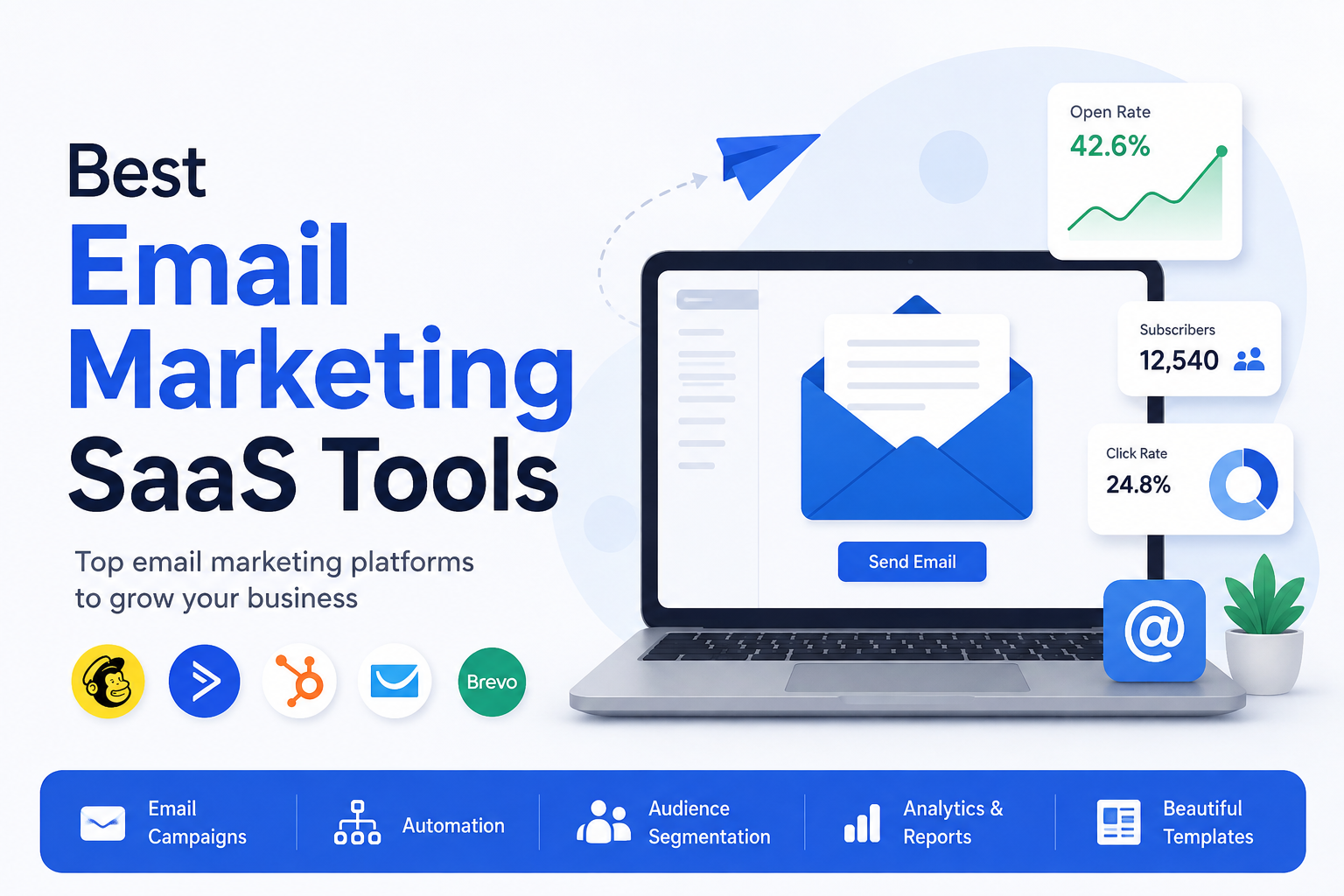
Email marketing is one of those things that looks simple from the outside, but when you actually start doing it, you quickly realize that there are many things to manage. You have to create emails, build subscriber lists, organize contacts, track results, and make sure your messages reach the right people at the right time. This is where email marketing SaaS tools can make a big difference.
In my opinion, a good email marketing SaaS platform should make email marketing easier instead of making it more complicated. I personally look for a platform that is simple to use, offers useful automation features, provides clear analytics, and does not require advanced technical knowledge.
There are many email marketing platforms available today, and each one has its own strengths. Some are better for beginners, while others are designed for growing businesses, online stores, agencies, and professional marketers. In this article, I will share my view of the best email marketing SaaS tools and explain what makes each platform useful.
What Is Email Marketing SaaS?
Email marketing SaaS means using an online software service to create, send, manage, and track email campaigns. SaaS stands for Software as a Service, which means you do not normally need to install complicated software on your computer.
You can simply create an account, log in through your browser, and start managing your email campaigns. Most platforms also provide features such as email templates, contact management, automation, analytics, forms, landing pages, and audience segmentation.
I think this model is especially useful for small businesses because you can start without investing in expensive software or technical infrastructure.
1. Mailchimp
Mailchimp is probably one of the most recognizable names in email marketing. It has been around for many years and has become popular among small businesses, bloggers, freelancers, and online stores.
What I like about Mailchimp is its beginner friendly approach. The platform provides tools for creating email campaigns, managing subscribers, designing forms, and checking campaign performance.
The email editor is also relatively easy to understand. You do not need to be a professional designer to create a decent looking newsletter.
Another useful feature is automation. You can create automated emails based on actions taken by subscribers. For example, a new subscriber can automatically receive a welcome email after joining your list.
From my point of view, Mailchimp is a good choice for beginners who want a familiar platform with a wide range of marketing features.
2. Brevo
Brevo is another email marketing SaaS platform that I think deserves attention. One of its biggest advantages is that it goes beyond traditional email newsletters.
Brevo offers email marketing, automation, contact management, transactional email, and other communication tools. This makes it useful for businesses that want to manage different types of customer communication from one platform.
I particularly like the idea of having automation available without making everything feel overly complicated. Businesses can create workflows for different customer actions and use them to communicate more efficiently.
Brevo can also be useful for companies that send transactional emails such as account notifications and order related messages.
In my opinion, Brevo is worth considering if you want an email platform that can support both marketing and customer communication.
3. Constant Contact
Constant Contact is another established name in the email marketing industry. I would consider it a practical option for small businesses, nonprofits, and organizations that want straightforward email marketing tools.
The platform focuses heavily on helping users create professional emails without needing advanced design skills.
One thing I appreciate about this type of platform is simplicity. Not every business needs hundreds of complicated marketing features. Sometimes you simply need to create an email, send it to your audience, and understand how people responded.
Constant Contact also provides tools for contact management, templates, automation, and reporting.
For someone who wants a straightforward email marketing experience, I think Constant Contact can be a solid option.
4. HubSpot
HubSpot is much bigger than a traditional email marketing platform. It combines email marketing with CRM, sales, customer service, and marketing tools.
This makes it particularly interesting for businesses that want to connect email campaigns with their overall customer journey.
For example, instead of only knowing whether someone opened an email, a business can connect marketing activity with customer information and other interactions.
I think HubSpot becomes especially valuable when a company starts growing and needs better organization between marketing and sales teams.
The platform does have more features than a beginner may need, so I would not necessarily recommend it to someone who only wants to send a simple weekly newsletter.
However, if you are building a serious marketing system, HubSpot can be a very powerful SaaS solution.
5. ActiveCampaign
ActiveCampaign is one of the platforms I would look at when automation is a major priority.
Email automation can save a huge amount of time. Instead of manually sending the same emails again and again, you can create workflows that respond to subscriber behavior.
For example, if someone downloads a guide from your website, you can automatically send a follow up email. If that person interacts with the message, another email can be sent later.
This type of automation can help businesses create personalized customer journeys.
What I like about ActiveCampaign is that it focuses heavily on automation and customer relationships. It can be useful for businesses that already have an audience and want to improve how they communicate with that audience.
6. GetResponse
GetResponse is another email marketing SaaS platform with a broad collection of features. It provides email marketing, automation, landing pages, forms, webinars, and other marketing tools.
I think its wider feature set can be useful for businesses that want more than basic newsletter functionality.
One benefit of having several marketing tools in one platform is that you can reduce the need to manage multiple services.
GetResponse can also be useful for marketers who want to create automated campaigns and landing pages as part of the same marketing strategy.
In my view, it is a good platform for users who want a combination of email marketing and additional digital marketing features.
7. ConvertKit
ConvertKit is particularly interesting for creators, bloggers, writers, and online educators.
The platform is designed around the idea of building an audience and communicating with subscribers in a simple way. This makes it different from some traditional business focused email platforms.
I like the fact that creators can focus on their content instead of spending too much time trying to understand complicated marketing systems.
If you are a blogger or content creator who wants to build an email list and regularly communicate with your audience, ConvertKit can be worth considering.
Its approach feels more focused on creators and personal brands, which is something I think many modern online businesses need.
8. AWeber
AWeber is another long standing email marketing platform. It provides tools for newsletters, automation, subscriber management, templates, and reporting.
One thing I personally value in an email marketing tool is reliability and ease of use. A platform does not need to have every possible feature if the features it offers are useful and easy to understand.
AWeber fits this idea fairly well. It can work for small businesses, bloggers, and organizations that want to manage email campaigns without creating an overly complicated setup.
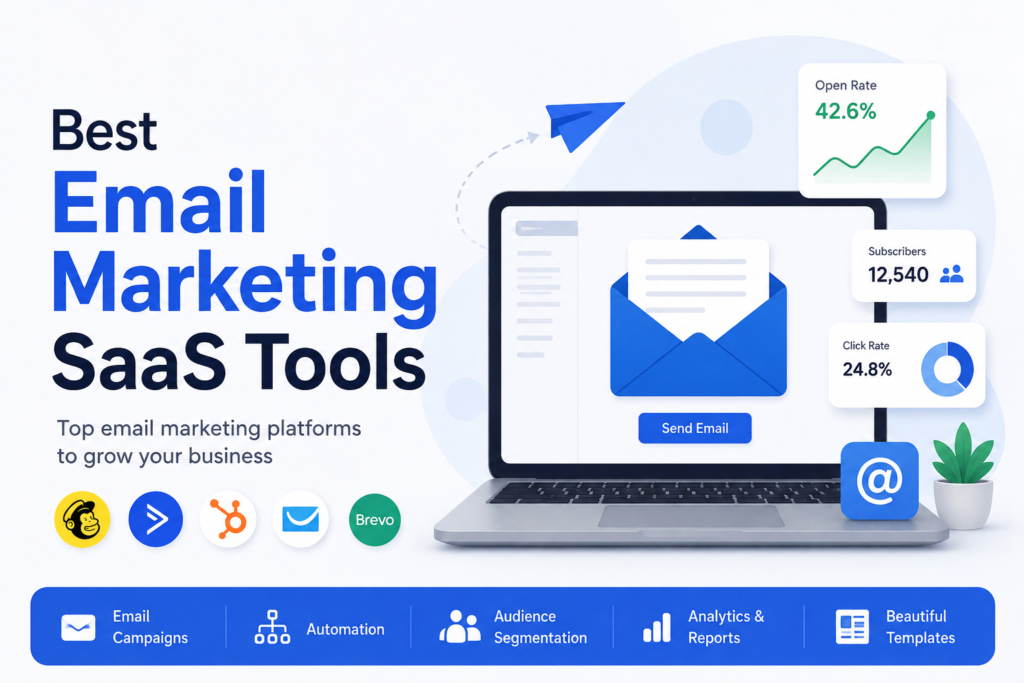
What Should You Look For in an Email Marketing SaaS?
Choosing the best email marketing platform is not only about selecting the most popular name. In my opinion, you should first think about what you actually need.
The first thing I would check is the email editor. If creating an email feels difficult, you may waste a lot of time.
The second important factor is automation. Good automation can reduce repetitive work and help you communicate with subscribers at the right time.
I would also pay attention to contact management. As your email list grows, you need a simple way to organize subscribers and create different audience groups.
Analytics are also extremely important. You should be able to understand how your campaigns are performing. Open rates, clicks, unsubscribes, and other performance information can help you improve future campaigns.
Another factor is scalability. A platform that works for a small list should ideally have options that can support you as your business grows.
Finally, I would look at the overall user experience. Even a platform with hundreds of features is not very useful if you cannot easily understand how to use them.
Why Email Marketing SaaS Is Important
I believe email marketing is still one of the most useful digital marketing channels because you can build a direct relationship with your audience.
Social media platforms can change their algorithms, but an email list gives you a direct communication channel with people who have chosen to hear from you.
A good SaaS platform makes this process easier. You can create campaigns, automate communication, study results, and improve your strategy over time.
For a small business, this can mean saving hours of manual work. For a larger company, it can mean creating a more organized customer communication system.
Final Thoughts
In my opinion, there is no single email marketing SaaS platform that is perfect for everyone. The best option depends on your business, audience, budget, technical skills, and marketing goals.
If you are a beginner, I would focus on simplicity and ease of use. If automation is your main priority, a platform such as ActiveCampaign may deserve more attention. For creators, ConvertKit can be an interesting choice. For businesses looking for a broader marketing and CRM system, HubSpot can be worth exploring.
Mailchimp, Brevo, Constant Contact, GetResponse, and AWeber are also useful options depending on your requirements.
Personally, I think the best email marketing SaaS is not necessarily the platform with the longest list of features. It is the one that helps you communicate with your audience consistently, understand your results, and grow your business without making your daily work unnecessarily complicated.
Before choosing a platform, I recommend thinking about your current needs rather than buying features you may never use. Start with the basics, build your email list, learn what your audience responds to, and then move toward more advanced automation and marketing features as your business grows.