Running an agency is not only about finding new clients and delivering quality services. It is also about building long term relationships, managing communication, tracking projects, and making sure every client receives the attention they deserve. As an agency grows, handling all these responsibilities manually becomes difficult.
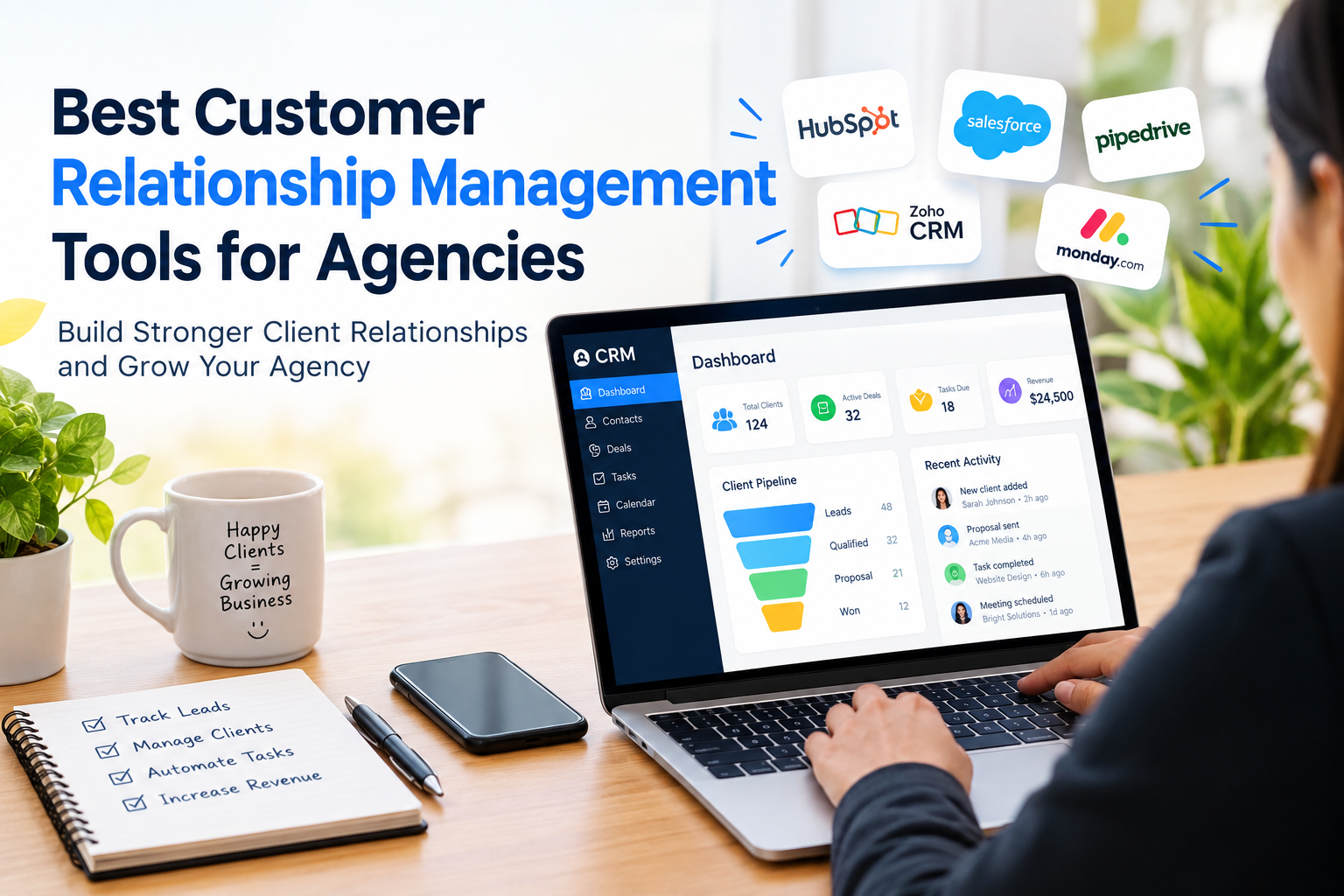
This is where the best customer relationship management tools for agencies become useful. A good CRM system helps agencies organize client information, manage leads, track sales opportunities, automate repetitive tasks, and improve communication.
In my opinion, choosing the right CRM is one of the practical steps an agency can take to improve its daily operations. Instead of keeping customer details in spreadsheets, emails, and different applications, everything can be managed from one central platform.
Whether you run a digital marketing agency, SEO company, web development business, or creative agency, the right CRM software can help you save time and manage clients more efficiently.
In this guide, I will discuss some of the best CRM tools for agencies, their important features, and how to choose a solution that matches your business needs.
What Is Customer Relationship Management Software?
Customer relationship management software, commonly known as CRM software, is a platform that helps businesses manage relationships with existing and potential customers.
For agencies, CRM software is especially useful because client communication and lead management are essential parts of everyday work.
A CRM system can help you:
- Store client contact information.
- Track potential customers and sales opportunities.
- Manage follow ups and meetings.
- Keep records of conversations.
- Automate repetitive administrative tasks.
- Monitor sales performance.
- Improve client retention.
From my perspective, the main purpose of CRM software is to make client management organized and less stressful.
Best Customer Relationship Management Tools for Agencies
1. HubSpot CRM
HubSpot CRM is one of the widely recognized customer relationship management platforms for agencies and growing businesses. It offers contact management, deal tracking, sales pipelines, email tools, and marketing features.
Key Features
- Contact and company management
- Sales pipeline tracking
- Email integration
- Meeting scheduling
- Marketing automation options
- Reporting dashboards
One thing I appreciate about HubSpot CRM is its user friendly interface. Agencies that are new to CRM software can start organizing their customer information without dealing with a complicated setup.
Its free CRM offering can also be useful for small agencies that want to begin with basic customer management before investing in advanced features.
Best For: Digital marketing agencies, small businesses, and teams looking for an accessible CRM platform.
2. Zoho CRM
Zoho CRM is another popular option for agencies that need flexible customer management features. It provides tools for managing leads, contacts, sales activities, and customer communication.
What makes Zoho CRM interesting is its customization capability. Agencies can adjust fields, workflows, and sales processes according to their business requirements.
Key Features
- Lead and contact management
- Workflow automation
- Sales forecasting
- Custom dashboards
- Email integration
- Customer activity tracking
In my opinion, Zoho CRM is worth considering for agencies that want more control over their customer management process without immediately moving toward an expensive enterprise solution.
It also works with other applications in the Zoho ecosystem, which can help businesses organize different operations.
Best For: Growing agencies, service providers, and businesses that need customizable CRM workflows.
3. Salesforce
Salesforce is a well known CRM platform designed to support businesses with complex sales and customer management requirements.
For agencies handling multiple clients, larger sales pipelines, and detailed reporting, Salesforce provides a broad range of capabilities.
Key Features
- Advanced customer management
- Sales pipeline automation
- Custom reporting
- Workflow management
- Integration options
- AI supported business features
Salesforce offers extensive customization, but beginners may need additional time to understand its interface and configuration.
I would consider Salesforce when an agency has a structured sales team and needs a CRM that can support more complex business processes.
Best For: Established agencies, larger teams, and businesses with advanced CRM requirements.
4. Pipedrive
Pipedrive is a sales focused CRM that helps agencies manage leads and track deals through different stages of the sales process.
Its visual sales pipeline makes it easier to understand which opportunities are active, which clients need follow ups, and where potential deals are getting delayed.
Key Features
- Visual sales pipeline
- Deal tracking
- Contact management
- Sales activity reminders
- Email synchronization
- Sales reporting
For agencies that depend heavily on proposals, consultations, and client acquisition, Pipedrive can help create a more organized sales process.
I particularly like the idea of having a clear overview of every opportunity instead of relying on memory or scattered notes.
Best For: Sales driven agencies, consultants, and small teams focused on lead conversion.
5. monday CRM
monday CRM combines customer relationship management with visual workflow management.
It can help agencies track leads, organize customer information, manage sales activities, and coordinate responsibilities across team members.
Key Features
- Customizable CRM boards
- Sales pipeline management
- Workflow automation
- Team collaboration
- Activity tracking
- Reporting tools
One advantage of monday CRM is its visual approach. Agencies that already use project management boards may find the interface familiar.
It can also help teams maintain visibility into client related activities.
Best For: Creative agencies, project based businesses, and teams that prefer visual workflows.
6. Freshsales
Freshsales is a CRM platform from Freshworks that provides sales management, communication, automation, and customer tracking features.
It can be useful for agencies that want to manage leads and client interactions from a centralized workspace.
Key Features
- Contact management
- Deal tracking
- Email and communication tools
- Sales automation
- Activity timelines
- Reporting dashboards
Freshsales is worth exploring if your agency wants to reduce manual sales administration and maintain organized client records.
Its available features and pricing depend on the selected plan.
Best For: Small and medium sized agencies that want sales management and automation features.
7. Insightly
Insightly combines CRM functionality with project management capabilities, making it relevant for service based agencies.
For agencies, winning a client is only the beginning. After signing a contract, the team still needs to manage tasks, responsibilities, deadlines, and customer communication.
Insightly helps connect customer relationships with project activities.
Key Features
- Contact and lead management
- Opportunity tracking
- Project management
- Task organization
- Workflow automation
- Reporting features
I find this combination useful for agencies that want to maintain a connection between sales activities and project delivery.
Best For: Web development agencies, consulting firms, and project based service providers.
Comparison of the Best CRM Tools for Agencies
Choosing between different CRM platforms becomes easier when you compare their primary strengths.
| CRM Tool | Main Strength | Suitable Agency Type |
|---|---|---|
| HubSpot CRM | Marketing and sales management | Small and growing agencies |
| Zoho CRM | Customization and automation | Flexible business operations |
| Salesforce | Advanced CRM capabilities | Larger agencies |
| Pipedrive | Visual sales pipeline | Sales focused agencies |
| monday CRM | Visual workflow management | Creative teams |
| Freshsales | Sales communication | Small and medium agencies |
| Insightly | CRM and project management | Service based agencies |
The right choice depends on your agency size, workflow, budget, and the features your team actually needs.
Important Features to Look for in Agency CRM Software
Not every CRM platform is designed around the same business requirements. Before selecting one, I recommend focusing on the features that can make everyday agency work easier.
Contact Management
A CRM should allow you to store client names, email addresses, phone numbers, company details, and communication history.
This makes it easier for team members to understand client relationships without searching through multiple applications.
Sales Pipeline Management
A clear sales pipeline helps agencies track leads from the first inquiry to the final agreement.
For example, you may create stages such as New Lead, Contacted, Meeting Scheduled, Proposal Sent, Negotiation, and Won.
This gives your team a better understanding of current sales activities.
Workflow Automation
Automation can reduce repetitive work such as assigning leads, scheduling reminders, and updating deal statuses.
For a small agency, even a few automated processes can save valuable working time.
Reporting and Analytics
Reporting features help agency owners understand lead generation, sales activity, conversion rates, and business performance.
Instead of relying entirely on assumptions, you can use available data to identify areas that need attention.
Integration Capabilities
Agencies often use email platforms, project management software, calendars, accounting applications, and communication tools.
A CRM that integrates with your existing applications can reduce duplicate data entry and improve workflow consistency.
How to Choose the Right CRM for Your Agency
Choosing the best customer relationship management tools for agencies requires more than comparing feature lists.
First, understand your current business challenges.
If your main problem is losing track of potential customers, prioritize lead management and follow up reminders.
If your team struggles with communication, look for contact timelines, shared records, and collaboration features.
If your agency handles many projects simultaneously, consider CRM software that connects customer records with project management.
Budget is another important factor. Many CRM providers offer free plans or trials, but advanced automation, reporting, and customization may require paid subscriptions.
I recommend testing a platform with a small group of team members before moving all your client information into it.
Also, consider how easily new employees can learn the system. A CRM is only useful when your team actually uses it consistently.
Benefits of Using CRM Software for Agencies
Better Client Relationships
When client information and previous conversations are organized, agencies can provide more relevant and consistent communication.
Improved Lead Management
CRM software helps ensure that potential customers receive timely follow ups instead of being forgotten.
Increased Team Productivity
Centralized information reduces unnecessary searching and makes daily responsibilities easier to manage.
More Organized Sales Activities
A structured pipeline helps agency owners understand where opportunities stand and what actions are required.
Better Business Visibility
Reports and dashboards can help identify patterns in sales activity, customer engagement, and business growth.
Common Mistakes Agencies Should Avoid
Even a powerful CRM cannot solve every business problem automatically.
One common mistake is choosing software with too many features that the team does not need. This can make daily work unnecessarily complicated.
Another mistake is failing to maintain accurate customer information. Outdated contact details and incomplete records reduce the usefulness of CRM software.
Agencies should also avoid automating every communication without reviewing the customer experience. Personal communication remains important in service based businesses.
Finally, do not ignore employee training. A short introduction to the CRM workflow can make adoption easier and improve consistency.
Final Thoughts
The best customer relationship management tools for agencies can help businesses organize client information, manage leads, improve communication, and create more efficient sales processes.
HubSpot CRM offers accessible customer management, Zoho CRM provides customization, Salesforce supports complex requirements, and Pipedrive focuses on visual sales tracking. Meanwhile, monday CRM, Freshsales, and Insightly offer different approaches to workflow and customer management.
From my point of view, the best CRM is not necessarily the platform with the largest number of features. It is the one that solves your agency’s actual problems, fits your budget, and makes daily work easier for your team.
Start by identifying your requirements, test a few suitable platforms, and select the one that supports your current operations while allowing room for future growth.
With the right CRM strategy, agencies can spend less time managing scattered information and more time building meaningful client relationships.