Running a small business is not always easy. From managing customer information to following up with potential buyers, business owners have many responsibilities every day. When customer details are scattered across spreadsheets, emails, and notebooks, it becomes difficult to stay organized. This is where CRM software becomes useful.
In my experience, managing customer relationships is one of the most important parts of building a successful business. A business may have excellent products or services, but without proper customer management, it can miss valuable opportunities.
The good news is that you do not always need to invest in expensive software to organize your business. There are several options for the best free CRM software for small business owners that provide useful features without requiring an initial subscription payment.
In this guide, I will discuss some popular free CRM tools, their features, benefits, limitations, and how to choose the right solution for your business. Whether you run a startup, online store, digital marketing agency, or service based company, these tools can help you manage customer relationships more efficiently.
What Is CRM Software and Why Does a Small Business Need It?
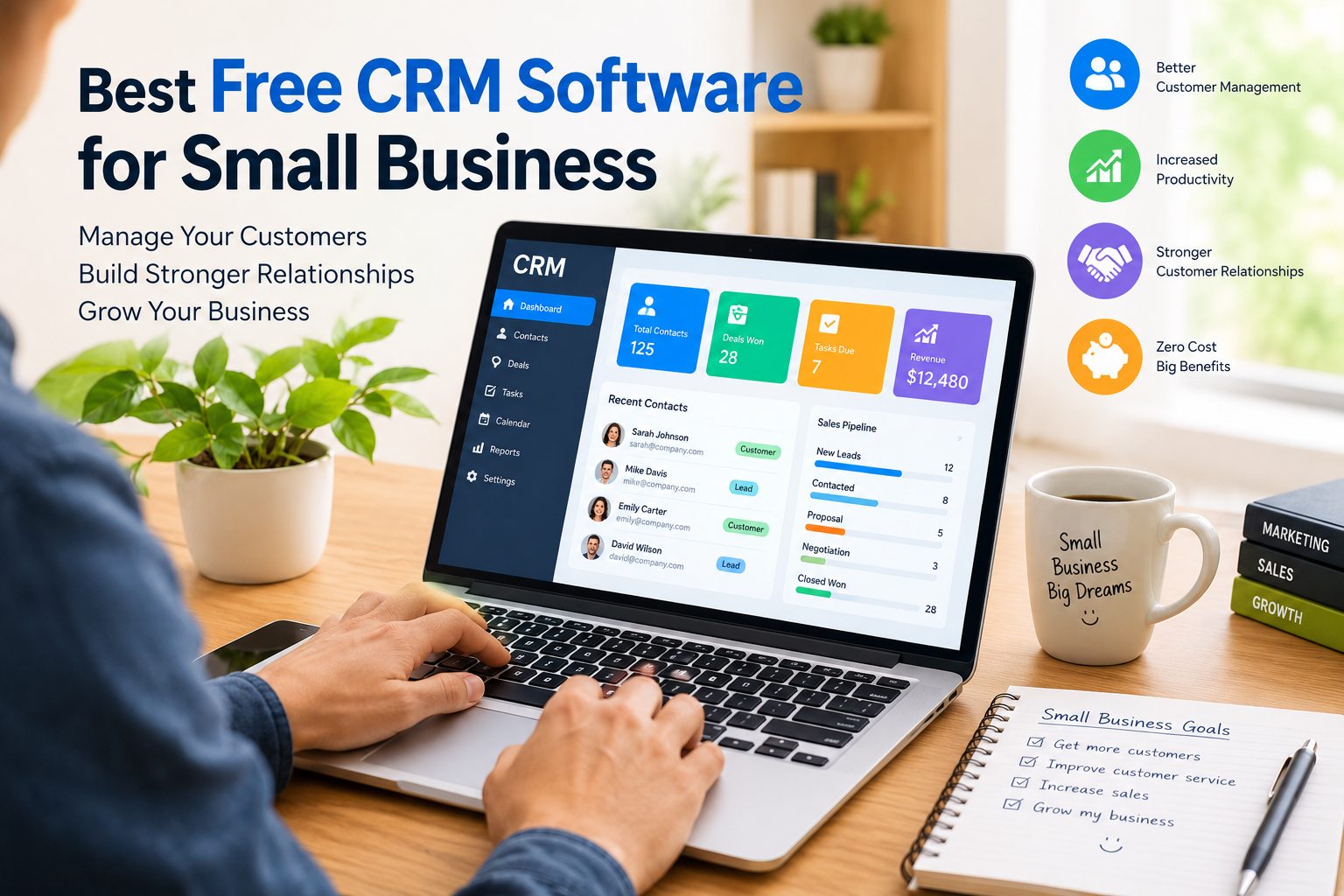
CRM stands for Customer Relationship Management. It is software designed to help businesses organize customer information, track sales activities, manage communication, and improve customer relationships.
For example, imagine that you receive inquiries from customers through your website, Facebook page, and email. Without a CRM system, you may forget to reply to someone or lose track of an important sales opportunity.
A CRM tool keeps customer information in one organized place.
Some common CRM features include:
- Contact management
- Lead tracking
- Sales pipeline management
- Customer communication history
- Task reminders
- Email integration
- Sales reporting
- Workflow automation
For small businesses, free CRM software can be especially helpful because it reduces manual work and makes daily operations easier to manage.
10 Best Free CRM Software for Small Business
There are many CRM platforms available, but not every tool is suitable for a small business with a limited budget. Below are some popular options worth exploring.
1. HubSpot CRM

HubSpot CRM
HubSpot CRM is one of the most recognized customer relationship management platforms for small businesses. It provides a free starting plan with tools for organizing contacts, tracking deals, and managing customer interactions.
What I like about HubSpot CRM is its straightforward interface. Beginners can understand the basic features without spending too much time learning complicated software.
The platform allows businesses to manage contact records, monitor sales activities, and keep track of customer communication.
Key features:
- Contact and company management
- Deal pipeline tracking
- Meeting scheduling
- Email tracking
- Basic reporting
- Integration with other business tools
HubSpot CRM can be useful for freelancers, startups, consultants, and small marketing agencies.
One thing to remember is that some advanced automation and reporting features require paid plans.
Website: https://www.hubspot.com/products/crm
2. Zoho CRM

Zoho CRM is another popular option for businesses looking for free CRM software.
It offers tools for managing leads, contacts, accounts, and sales activities. Its free edition is designed for small teams, although feature availability and user limits should be checked before signing up.
I find Zoho CRM interesting because it is part of a larger business software ecosystem. Businesses that already use other Zoho applications may find its integrations useful.
Key features:
- Lead management
- Contact organization
- Sales activity tracking
- Workflow features depending on plan
- Mobile application
- Business application integrations
Zoho CRM can be considered by small companies that want to begin with basic customer management and potentially expand their software setup later.
Website: https://www.zoho.com/crm/
3. Bitrix24

Bitrix24 combines customer management with collaboration and productivity features.
For a small business, having customer information and team activities in one platform can make daily work easier.
Bitrix24 offers CRM functionality alongside tools for tasks, communication, and project management. Its free plan has feature and usage limits that businesses should review.
Key features:
- Customer database
- Sales pipeline
- Task management
- Team collaboration
- Contact forms
- Communication tools
In my opinion, Bitrix24 is worth considering for businesses that want more than a basic contact management system.
However, its wide range of features may take some time for beginners to understand.
Website: https://www.bitrix24.com/
4. Freshsales

Freshsales is a CRM platform designed to help businesses manage leads and sales activities.
It provides tools for tracking customer interactions and organizing sales opportunities. Freshsales has offered free entry level access, but current availability and plan limits should be verified before registration.
Key features:
- Contact management
- Lead tracking
- Deal management
- Sales activity monitoring
- Email integration
- Sales reporting
Freshsales may be useful for small businesses that depend on regular communication with potential customers.
I particularly like the idea of using a CRM to keep follow ups organized rather than depending on memory or scattered notes.
Website: https://www.freshworks.com/crm/sales/
5. EngageBay

EngageBay is designed for businesses that want customer management, marketing, and sales features in one place.
Small businesses often use separate tools for email marketing, lead management, and customer communication. EngageBay aims to bring several of these activities together.
Key features:
- Contact management
- Email marketing tools
- Sales pipeline
- Landing page tools
- Marketing automation features
- Customer support functionality
Its free plan may be suitable for businesses with basic requirements, although advanced capabilities and usage limits vary by subscription.
For a startup that wants to manage marketing and sales together, EngageBay is worth exploring.
Website: https://www.engagebay.com/
6. monday CRM

monday CRM focuses on visual organization and workflow management.
Its board based interface allows users to organize sales activities, customer information, and business processes.
One advantage of visual CRM software is that it can make information easier to understand, especially for people who prefer organized boards over traditional spreadsheets.
Key features:
- Visual sales pipelines
- Contact management
- Sales activity tracking
- Customizable workflows
- Team collaboration
- Business dashboards
It is important to check the current free trial and subscription conditions because ongoing free access may not be available for every CRM offering.
Website: https://monday.com/crm
7. Capsule CRM

Capsule CRM is focused on making customer relationship management simple.
Some small business owners do not need complicated marketing automation or advanced reporting. They simply want to store contacts, remember conversations, and monitor sales opportunities.
Capsule CRM provides a straightforward approach to these tasks.
Key features:
- Contact management
- Sales pipeline
- Task reminders
- Customer history
- Sales opportunity tracking
- Integrations
Capsule has offered a free plan for small teams with restrictions on contacts and other functionality. Check its current pricing details before choosing it.
Website: https://capsulecrm.com/
8. Streak CRM

Streak CRM is different from many traditional CRM platforms because it works directly within Gmail.
For businesses that already use Gmail for customer communication, this approach can feel natural.
Instead of constantly switching between applications, users can manage customer information and sales processes from their email environment.
Key features:
- Gmail integration
- Contact tracking
- Sales pipeline management
- Email tracking
- Customer communication history
- Workflow organization
Streak offers a free entry level option, although advanced features and usage are restricted.
I would consider it for freelancers, consultants, and small businesses that handle most customer conversations through email.
Website: https://www.streak.com/
9. Flowlu

Flowlu combines CRM with project management and other business tools.
This can be useful when a business needs to manage both customer relationships and the work associated with each customer.
For example, a digital marketing agency may need to track a new lead, prepare a proposal, manage the project, and monitor related tasks.
Key features:
- Contact management
- Sales opportunities
- Project management
- Task tracking
- Invoicing features
- Team collaboration
Flowlu offers a free plan with restrictions. It is worth checking whether the available limits match your team’s requirements.
Website: https://www.flowlu.com/
10. Bigin by Zoho CRM

Bigin by Zoho CRM is designed for small businesses that need a simpler customer management experience.
Traditional CRM platforms can sometimes feel overwhelming when a business only has a few employees.
Bigin focuses on pipelines, contacts, and sales activities, making it an option for companies that want to start with a relatively simple system.
Key features:
- Multiple pipeline capabilities depending on plan
- Contact management
- Sales activity tracking
- Workflow tools
- Mobile access
- Integration options
Bigin offers a free entry point with restrictions. Review its current plan details before making a decision.
Website: https://www.bigin.com/
Comparison of Free CRM Software for Small Business
| CRM Software | Main Purpose | Suitable For |
|---|---|---|
| HubSpot CRM | Customer and sales management | Startups and agencies |
| Zoho CRM | Lead and contact management | Small companies |
| Bitrix24 | CRM and collaboration | Small teams |
| Freshsales | Sales tracking | Sales focused businesses |
| EngageBay | CRM and marketing | Startups |
| monday CRM | Visual workflow management | Growing teams |
| Capsule CRM | Simple customer management | Freelancers |
| Streak CRM | Gmail based CRM | Consultants |
| Flowlu | CRM and project management | Service businesses |
| Bigin | Simple sales pipelines | Small businesses |
Free plans change over time. Always confirm the current number of users, contact limits, storage, and included features on the official website.
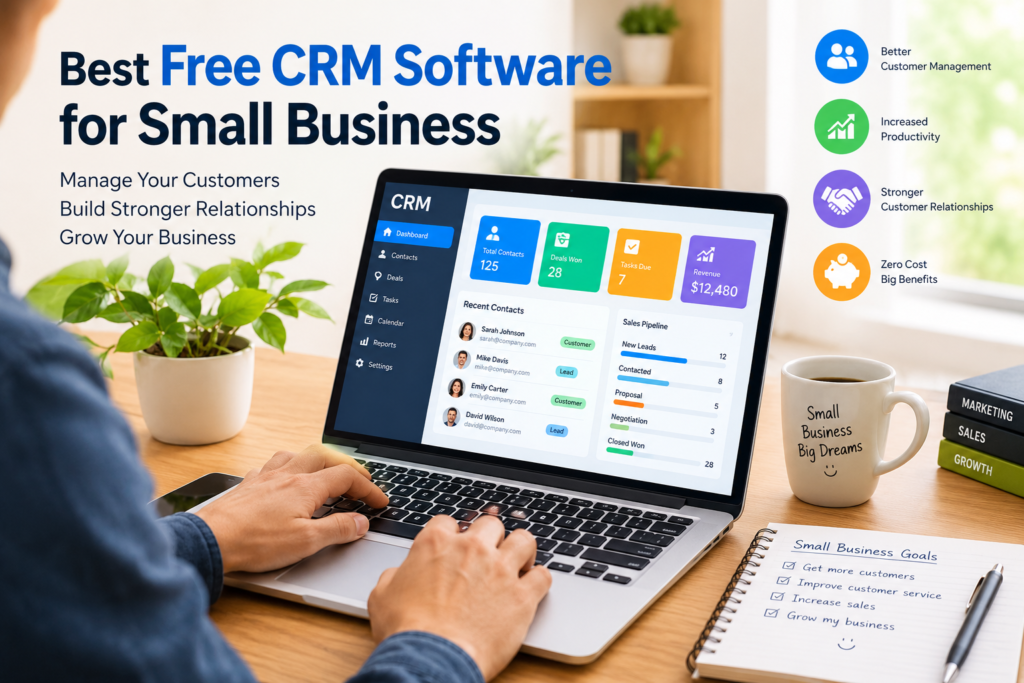
Benefits of Using Free CRM Software for Small Business
Choosing a free CRM tool can provide several practical benefits.
Better Customer Organization
Customer information becomes easier to access when it is stored in one place. You can review contact details, previous conversations, and sales progress without searching through multiple files.
Improved Follow Ups
Following up with customers at the right time can make a difference in business communication.
CRM reminders help reduce the chances of forgetting important conversations or potential sales opportunities.
Less Manual Work
Many CRM platforms provide features that reduce repetitive administrative tasks. Even basic automation can help business owners save time.
Better Team Collaboration
When multiple employees handle customer inquiries, a CRM helps everyone understand the current status of each customer.
This reduces confusion and makes responsibilities clearer.
More Organized Sales Activities
A sales pipeline allows businesses to monitor opportunities from the first inquiry to the final purchase.
It also helps identify where potential customers may need additional information.
How to Choose the Right Free CRM Software
Before selecting a CRM platform, I recommend understanding your actual business requirements.
Identify Your Business Needs
If you only need contact management, a simple CRM may be enough. If you require sales reporting, automation, or marketing features, look for a platform that supports those activities.
Check Free Plan Limitations
Some CRM providers offer free plans with restrictions on users, contacts, emails, or storage.
Do not choose a tool based only on its free label. Make sure its limitations will not interrupt your daily operations.
Consider Ease of Use
A CRM should make your work easier, not create additional complexity.
Look for a clean interface, simple navigation, and helpful onboarding resources.
Review Integrations
Check whether the CRM connects with your existing email, website forms, calendar, and other business applications.
Integrations can reduce manual data entry.
Think About Future Growth
Your business may grow over time. It is useful to select software that offers a suitable upgrade path if your customer database or team expands.
Common Mistakes to Avoid When Using CRM Software
Even the best CRM software cannot provide much value if it is not used properly.
One common mistake is adding customer information without keeping it updated. Incorrect phone numbers, outdated email addresses, and incomplete records can create communication problems.
Another mistake is choosing too many features at the beginning. Small businesses should start with essential functions and gradually explore additional capabilities.
It is also important to train team members. If employees do not understand how to update customer records or track sales activities, the CRM database may become unreliable.
Finally, businesses should pay attention to data security. Use strong passwords, enable available security features, and review access permissions carefully.
Final Thoughts
Finding the best free CRM software for small business depends on your business model, team size, and daily requirements.
HubSpot CRM, Zoho CRM, Bitrix24, Freshsales, and EngageBay are among the platforms worth exploring. Other tools such as Streak, Capsule, Flowlu, and Bigin may also suit businesses with more specific needs.
Personally, I believe small businesses should focus on simplicity before investing time in advanced features. A CRM that helps you organize customers, remember follow ups, and understand sales activities can be useful even when your business is still in its early stages.
Start with a free plan, test the features using real business workflows, and evaluate whether it genuinely saves time.
The goal is not simply to use popular software. The real goal is to build stronger customer relationships, improve organization, and create a smoother business management process without placing unnecessary pressure on your budget.
Frequently Asked Questions
What is the best free CRM software for small business?
HubSpot CRM, Zoho CRM, Bitrix24, and other platforms offer free or entry level options. The right choice depends on your required features, team size, and usage limits.
Can I use CRM software for free permanently?
Some providers offer ongoing free plans, while others provide free trials or limited access. Always check the current pricing page before registering.
Is free CRM software suitable for startups?
Yes. Free CRM software can help startups organize customer information, manage leads, and track sales activities without an initial software subscription cost.
Does free CRM software support automation?
Some free plans include basic automation, while advanced workflows may require a paid subscription.
Can I use CRM software without technical knowledge?
Yes. Many CRM platforms are designed for beginners and provide simple dashboards, tutorials, and onboarding assistance.