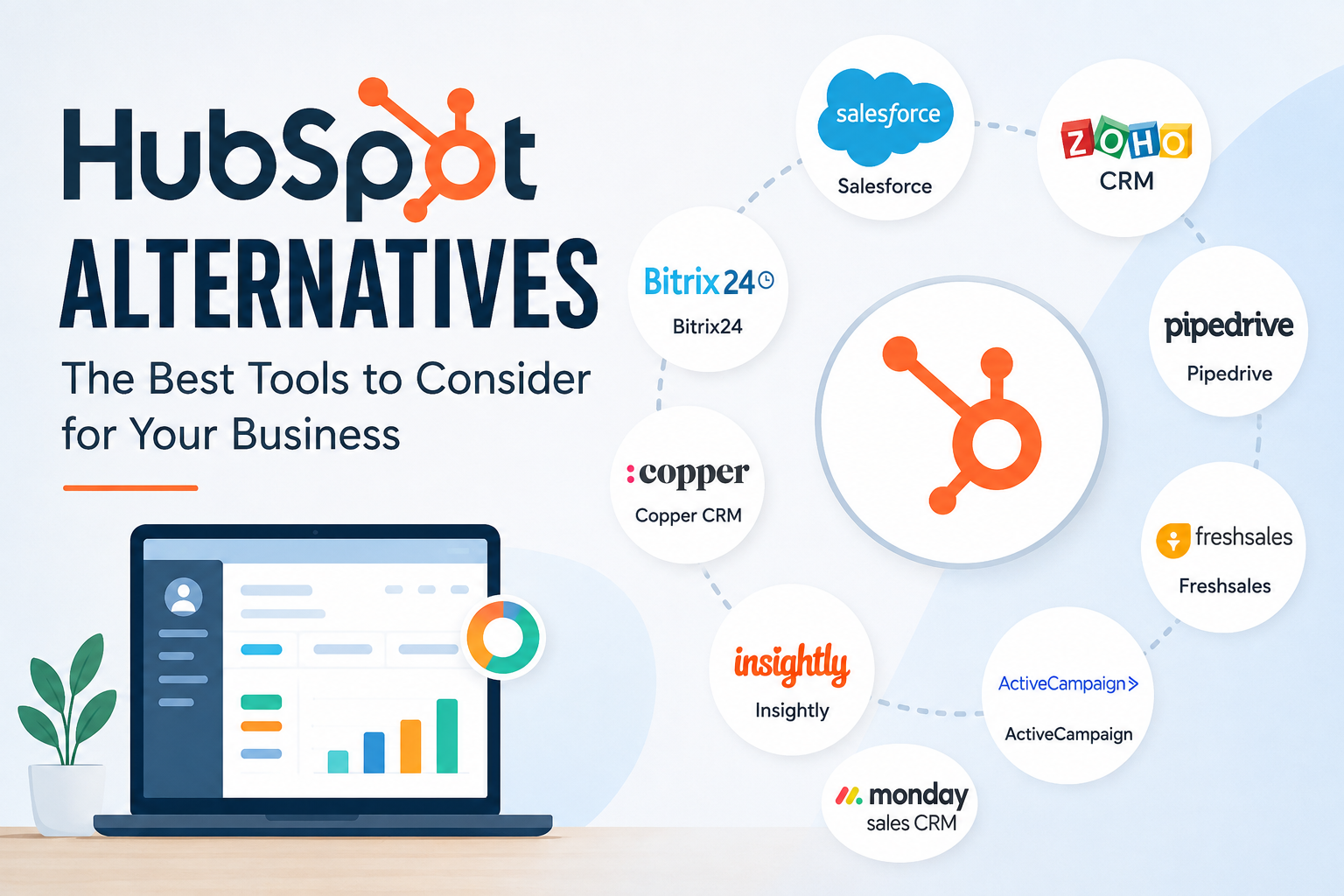
When I started looking at customer relationship management tools, HubSpot was one of the first names I came across. It is a popular platform because it brings marketing, sales, customer service, and CRM features together in one place. However, after exploring different options, I realized that HubSpot is not the perfect choice for everyone.
Every business has different needs. Some companies want a simple CRM, while others need advanced automation, email marketing, sales management, or customer support features. Price is also an important factor, especially for small businesses and startups.
That is why I decided to explore some HubSpot alternatives. In my opinion, choosing an alternative can make sense when you want more flexibility, a simpler interface, different features, or a pricing plan that better matches your budget.
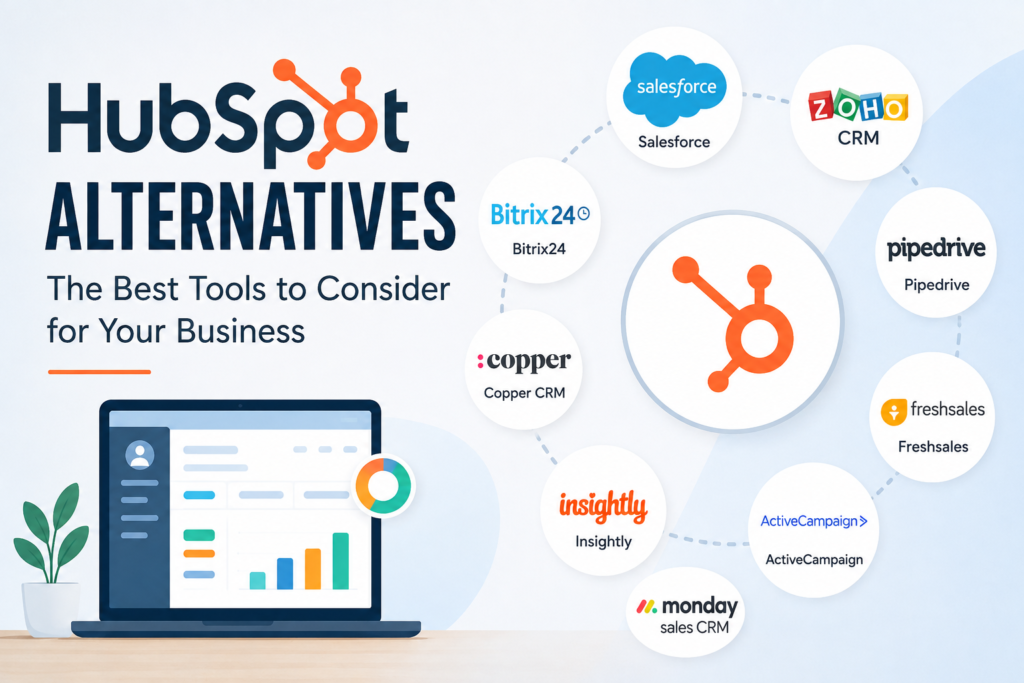
In this article, I will share some of the HubSpot alternatives that I think are worth considering and explain what makes each one different.
Why Look for HubSpot Alternatives?
Before discussing alternatives, I think it is important to understand why someone might want to move away from HubSpot.
HubSpot offers many features, but having a large number of features can sometimes make the platform feel complicated. If you only need basic CRM functions, you may not want to spend time learning tools that you are never going to use.
Another reason is pricing. A business may start with free or affordable features and later discover that advanced functionality can become more expensive as its needs grow. For a small company, this can have a noticeable impact on the monthly budget.
Some users may also prefer specialized software. Instead of using one large platform for everything, they may want one tool for CRM, another for email marketing, and another for customer support.
For these reasons, I believe it is worth comparing HubSpot with other platforms before making a final decision.
1. Salesforce
Salesforce is one of the biggest names in the CRM industry and is probably one of the first alternatives I would consider for a larger organization.
Salesforce provides powerful tools for sales, customer management, marketing, analytics, and automation. One thing I like about Salesforce is how customizable it can be. Businesses with complex processes can configure the platform according to their requirements.
The downside is that Salesforce can feel overwhelming for beginners. There are many features and customization options, so it may take time to learn.
In my opinion, Salesforce is better suited to medium and large businesses that need an advanced CRM rather than someone looking for a simple solution.
2. Zoho CRM
Zoho is another alternative I would recommend checking out. Zoho CRM focuses on managing leads, contacts, sales activities, and customer relationships.
One reason I like Zoho is that it offers a wide range of business tools. If you already use other Zoho products, connecting them with Zoho CRM can create a useful business ecosystem.
The interface is also relatively straightforward compared with some advanced CRM platforms. It can work for small businesses as well as growing companies.
For someone who wants many business features without immediately choosing a very complicated enterprise platform, I think Zoho CRM is worth considering.
3. Pipedrive
Pipedrive takes a slightly different approach. Instead of trying to cover every possible business function, it focuses strongly on sales and pipeline management.
I personally like this approach because not every business needs a huge collection of tools. If the main goal is to organize leads, track deals, manage sales activities, and understand where prospects are in the sales process, Pipedrive can be a strong choice.
Its visual sales pipeline makes it easier to see what is happening with different deals. This can be particularly useful for small sales teams.
I would consider Pipedrive a good HubSpot alternative for businesses that are primarily interested in sales rather than an all in one marketing platform.
4. Freshsales
Freshworks offers Freshsales, a CRM designed to help businesses manage leads, contacts, deals, and customer interactions.
One thing I find interesting about Freshsales is its focus on making CRM easier for businesses that do not want an overly complicated system. It includes tools for communication, sales tracking, automation, and reporting.
Freshsales can be a good option for small and medium sized businesses that want useful CRM features while keeping the experience relatively simple.
If you are moving away from HubSpot because you want something easier to manage, I think Freshsales deserves a place on your comparison list.
5. ActiveCampaign
ActiveCampaign is especially interesting for businesses that care about email marketing and automation.
While it includes CRM functionality, its strength is automation and customer communication. Businesses can create automated email campaigns based on customer actions and behavior.
For example, you can create a sequence that sends different emails depending on whether someone opens an email, clicks a link, or completes a specific action.
In my opinion, ActiveCampaign is a strong alternative when marketing automation is more important to you than having a massive collection of CRM features.
6. Monday Sales CRM
monday.com offers Monday Sales CRM, which combines customer relationship management with the flexible workspace experience associated with the Monday platform.
I think this can be useful for teams that want to customize their workflows. You can organize information, track leads, manage deals, and create processes that match how your team actually works.
The visual approach is also helpful for people who do not enjoy traditional CRM interfaces.
For growing teams that want flexibility and collaboration alongside CRM functions, Monday Sales CRM is an option worth exploring.
7. Insightly
Insightly combines CRM features with project management capabilities.
This combination can be useful for businesses that continue working with customers after a sale. Instead of treating sales and project delivery as completely separate processes, you can connect customer information with projects and tasks.
I think this makes Insightly particularly interesting for agencies, service businesses, and companies that manage customer projects.
If your business needs both CRM and project management, Insightly may provide a more focused experience than using a large platform with features you do not need.
8. Copper CRM
Copper is another CRM I would consider, especially for teams that work heavily with Google Workspace.
Copper is designed to fit naturally into workflows involving tools such as Gmail and Google Calendar. This can make customer management feel more familiar because users do not necessarily have to move between completely different systems all the time.
I think Copper is a good choice for businesses that already rely heavily on Google Workspace and want CRM functionality that fits into their existing workflow.
9. Bitrix24
Bitrix24 offers a broad collection of business tools, including CRM, communication, project management, and collaboration features.
What makes it interesting to me is that it tries to combine several business functions into one platform. This can reduce the need to purchase multiple separate applications.
However, because there are so many features, beginners may need some time to understand the platform.
I would consider Bitrix24 when a business wants an affordable all in one environment rather than a CRM focused only on sales.
How to Choose the Right HubSpot Alternative
Choosing the right alternative depends on what your business actually needs.
The first thing I would look at is your main goal. If you mainly need sales pipeline management, Pipedrive may be a better fit. If marketing automation is your priority, ActiveCampaign could be more suitable.
For larger organizations that require advanced customization, Salesforce may be worth considering. For businesses that want a broad collection of business tools, Zoho or Bitrix24 could make more sense.
I would also pay close attention to pricing. Do not only look at the starting price. Check what happens when your team grows and you need more contacts, automation, users, storage, or advanced features.
Another important factor is ease of use. A CRM can have hundreds of features, but those features are not useful if your team does not know how to use them.
Finally, I recommend checking integrations. Your CRM should work well with the other tools your business already uses.
HubSpot Alternatives Compared
In my view, there is no single alternative that is best for everyone. Each platform has a different strength.
Salesforce is a strong choice for larger and more complex organizations. Zoho CRM offers a broad business ecosystem. Pipedrive is excellent for sales pipeline management. Freshsales provides a relatively simple CRM experience. ActiveCampaign stands out for marketing automation.
Monday Sales CRM is useful for flexible workflows, while Insightly can be attractive to businesses that need CRM and project management together. Copper works well for Google Workspace users, and Bitrix24 is worth considering if you want many business functions in one platform.
The best choice depends on your team, budget, goals, and technical requirements.
Final Thoughts
After looking at different HubSpot alternatives, my main conclusion is that you should not choose a CRM simply because it is popular. A platform should fit the way your business actually operates.
HubSpot can be an excellent option for many businesses, but it is not the only solution available. Some companies may prefer a simpler CRM, while others may need stronger sales tools, better automation, or more customization.
Personally, I would start by writing down the features I actually need and then compare platforms based on those requirements. I would also test the software before making a long term commitment.
The right CRM should make your work easier, help your team stay organized, and improve the way you communicate with customers. If a HubSpot alternative can do that while fitting your budget and workflow, then there is no reason to choose a platform simply because it is the most famous name in the market.